Bergsliens gate 12, Oslo
2021.01.05 09:59
Improved energy efficiency and indoor climate while preserving and restoring the lost original architectural expression.
Developer
Boligbygg Oslo KF
Municipality
Oslo
Architect
RiK Arkitektur AS
Status
Completed (2016)
Project description
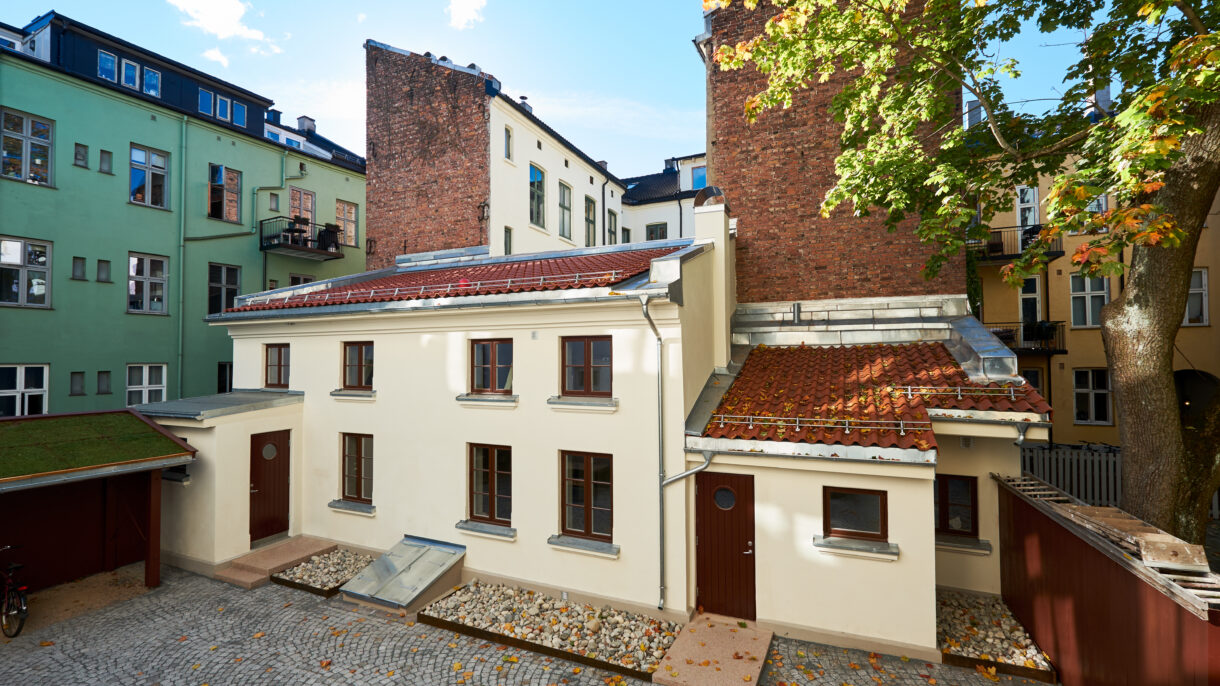
The project involved the rehabilitation of a historically significant carriage house in a courtyard behind a building in Oslo. The building was first erected as a carriage house in 1887 and converted into two apartments in 1989. The project included drainage around the building, replacing and insulating the roof and restoring the façade with 70 mm super insulating lime render. The windows and exterior door have been replaced in accordance with today´s energy standard, but also according to antiquarian principles of appearance and detail.
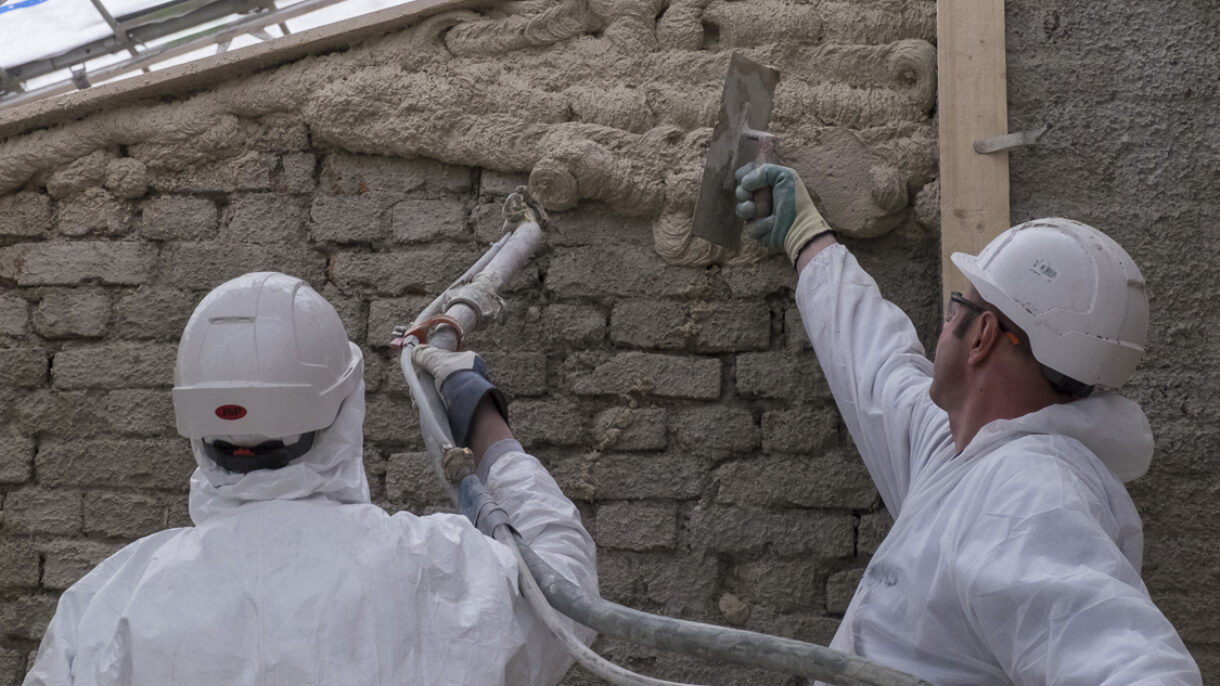
Super insulating lime mortar with aerogel is a new and innovative product that until now has not been used for insulation projects in Norway. Monitoring instruments were installed for continued follow-up of both thermal and moisture transmission in the walls. In this way the project can provide important data on the material`s suitability to the Norwegian climate.
In addition to the rehabilitation of the building, the project has contributed by upgrading the inner courtyard of the property thus creating a functional and enjoyable space. The interplay between the courtyard and the buildings illuminates the historical values of the building. The upgrading has provided better storm water handling and the establishment of bicycle facilities in the well-established and centrally-located city courtyard.
The insulating lime mortar was previously tested in Switzerland and a few other European countries, but never in Norway prior to the Bergsliens gate project. As such, this project has been a pilot intended to document the qualities of insulating lime mortar in a Norwegian climate.
The temperature and humidity in the lime mortar will therefore be continually measured, along with the energy used in the building for the heating of the apartments. The Norwegian University of Life Sciences, NBMU, will collect, evaluate and document the results.
The project had as its goal to create an attractive courtyard with a focus on functionality, enjoyment, increased green surfaces, and improved storm water handling. The latter was accomplished by replacing the asphalt with cobblestones. A sedum roof above the bicycle and stroller parking space also contributes to the absorption of rainwater.
In addition, the new lighting and seating provide increased safety in the courtyard. The reorganisation gives a new line of sight and a separation between the courtyard and the actual building in the form of stone beds adjacent to the wall. The beds create a “private” zone along the building and protect the façade from direct contact and damage. Robust materials – stone, wood and steel – were chosen to ensure that minimal costs will be incurred in the repair and maintenance of the building.
The project has considered the building´s historical values by restoring the appearance of the windows, doors, decorative framing and details to the original 1887 expression. Oslo´s heritage office approved the initiatives and sees the potential for further use of aerogel products for future rehabilitation of historical buildings in the city.
Low carbon strategies
Since this is a small scale pilot project, an analysis of the greenhouse gas emissions has not been undertaken. Despite the fact that the super insulating mortar in question has an EPD, the data available is too limited to complete an accurate assessment of the total emissions of the project.
A SIMIEN report was completed in the design phase that showed that the energy needs and associated greenhouse gas emissions of the completed building will be reduced by 50 percent compared with the needs prior to the refurbishment.
The most important greenhouse gas reduction initiative for the project has been to preserve as much as possible the original building and re-use the materials, in combination with the additional insulation of the building envelope, replacement of doors and windows and the insulation of the roof.
The distance to the closest public transport link is approximately 300 metres. The property is located near Majorstua and St. Hanshaugen, in an area where bicycle transport is popular. As a part of the rehabilitation and improvements to the courtyard, bicycle parking was established under a green roof. This contributes to making bicycle transport more attractive for the building´s inhabitants.
The original exterior walls consisted of 1.5 courses of bricks with cement rendering on either side. After a complete removal of the façade, 70mm super-insulating lime mortar was applied to the exterior walls. To strengthen the surface against damage, the mortar was finished with fibre reinforcement and rendered with an 8mm thick protective layer. Finally, the mortar was coated with a chalk-based paint.
New windows made of heartwood of pine and similar to the original design were installed. The roof is insulated with mineral wool, while the roof tiles are terra cotta. Flashing, guttering and downpipes are zinc.
The courtyard is covered in cobblestones. The stone and planting beds are made with Corten steel. The stone slabs in front of the entry doors are of red granite. Sedum planting covers the roof of the wood structure over the bicycle and stroller storage area.
Read more about Bergslies gate 12 in Cato Solheims Master’s Thesis at Faculty of Environmental Sciences and Natural Resource Management, Norwegian University of Life Sciences: Application of Aerogel - based plaster for refurbishment and preservation of a listed historic masonry building in Norway – an in-situ energy efficiency study
Environmental Measures
Bymiljø og arkitektur
Gårdsrommet
Prosjektet har hatt som mål å skape et attraktivt gårdsrom med fokus på funksjonalitet, trivsel og grønne flater, og forbedret overvannshåndtering ved å erstatte asfalt med brostein. Sedumtak på sykkel- og barnevognskur bidrar også til fordrøyning av overvannet.
I tillegg har ny belysning og nye sitteplasser gitt økt trivsel og skapt mer trygghet i gårdsrommet. Det har blitt etablert nye siktakser og et skille mellom gården og selve bygget i form av steinbed inntil veggen. Bedene gir en «privat» sone langs bygget og beskytter fasaden mot direkte påkjenninger og skader. Det er tatt hensyn til drift og vedlikehold ved valg av robuste materialer, som i hovedsak består av stein, tre og stål.
Antikvarisk tilbakeføring
Prosjektet har ivaretatt kulturminneverdier gjennom å tilbakeføre utseende av vinduer, dører, utsmykninger av omramming og detaljer til det opprinnelige utseendet fra 1887. Trekning mot gesims har blitt videreført, og pussen er avsluttet med kalkmaling. Byantikvaren i Oslo har godkjent tiltaket, og ser potensiale for videre satsing på dette produktet ved fremtidig rehabilitering av verneverdige bygg.
Klimagassutslipp
Siden dette er et forsøksprosjekt i liten målestokk, har det ikke blitt utarbeidet klimagassregnskap. Selv om det foreligger EPD på den superisolerende kalkpussen, er dataunderlaget utilstrekkelig for utarbeidelse av det totale klimagassregnskapet for prosjektet.
Det er utarbeidet en SIMIEN-rapport i prosjekteringsfasen som viser at energibehov og klimautslipp vil reduseres med over 50 prosent.
De viktigste klimagasstiltakene for prosjektet har vært å bevare mest mulig av det opprinnelige bygget og gjenbruke materialene sammen med etterisolering av bygningskroppen, utskifting av dører og vinduer og etterisolering av tak.
Areal og transport
Avstand til nærmeste kollektivtransport er cirka 300 meter. Gården ligger nær Majorstua og St. Hanshaugen, i et område hvor sykkeltransport er meget aktuelt. Som en del av rehabiliteringen og opprustingen av bakgården er det etablert ny sykkelparkering under grønt tak, som gjør det mer attraktivt for beboerne å bruke sykkel.
Energi
Fasaden er pusset med 70mm superisolerende kalkpuss med en lambdaverdi på 0,028 W/mK. Grunnmuren er etterisolert med 100 mm isodren. Dører og vinduer er skiftet ut, og taket er etterisolert med mineralull. Krypkjelleren er utbedret og etterisolert.
Simuleringer viser at oppvarmingsbehovet i gården vil reduseres med ca. 50 prosent som følge av tiltakene.
Konstruksjoner og materialbruk
De originale ytterveggene bestod av halvannen steins tegl med sementpuss på begge sider. Etter full nedhugging av alle fasadene er ytterveggene pusset med 70 mm superisolerende kalkpuss. For å styrke overflaten mot ytre påkjenninger, er pussen avsluttet med fiberarmering og sparklet med et 8 mm tykt beskyttende lag. Til slutt er pussen påført ren kalkmaling.
Det er satt inn nye vinduer i kjerneved som er tilnærmet like de opprinnelige. Taket er etterisolert med mineralull, mens taksteinen er enkelkrummet i tegl. Beslag, takrenner og taknedløp er utført i rheinzink.
Gårdsplassen er belagt med brostein. Stein- og plantebed er utført i cortenstål. Steinhellene foran inngangsdørene er i rød granitt. Sykkel- og barnevognskuret er utført i tre med sedumtak.
Key Figures
| Area BTA | 92 m2 |
| Area BRA | 89 m2 |
| Heated area BRA | 90 m2 |
| Number of residents / users | 4 |
| glass Share | 10 % |
ENERGY
| Net energy: | 324 kWh/m2/year (NS3031) |
| Supplied energy is calculated: | 356 kWh/m2/year (NS3031) |
| 355 kWh/m2/year Passive House standard |
ENERGY BUDGET
| Space heating: | 247,3 kWh/m2/year |
| Plumbing: | 7,4 kWh/m2/year |
| Hot water: | 29,8 kWh/m2/year |
| Lighting: | 11,4 kWh/m2/year |
| Technical equipment: | 17,5 kWh/m2/year |
TRANSPORTATION
| Distance to center: | 500 m |
| Nearest welding mac. koll.knutepkt: | 300 m |
COSTS AND SUPPORT
| Project support Enova: | 460000 kr |
Project Information
PROJECT DETAILS
| Address: | Bergsliens gate 12 B-C |
| Municipality: | Oslo |
| Status: | Completed (2016) |
| Project type: | Reuse / rehabilitation / transformation |
| Function / Building type: | Housing area / housing development |
| Exemplar Program: | FutureBuilt |
| Competition Form: | Framework agreement |
| Contract practice: | Construction management contract |
PROJECT TEAM
| Client: | Boligbygg Oslo KF |
| Architect: | RiK Arkitektur AS |
| Environmental Consultant: | Sweco Norge AS |
| Special Adviser energy: | Sweco Norge AS |
| Counselors: | COWI AS | Isokalk AS (produsenter) |
| Construction Management: | Sweco Norge AS |
| Subcontractors: | Thorendal AS (fasade), Drogseth AS (tak), Bjerk-Lind Bygg AS (utomhus) |
Map
Map