Kringsjå family homes, Oslo
2022.11.02 15:57
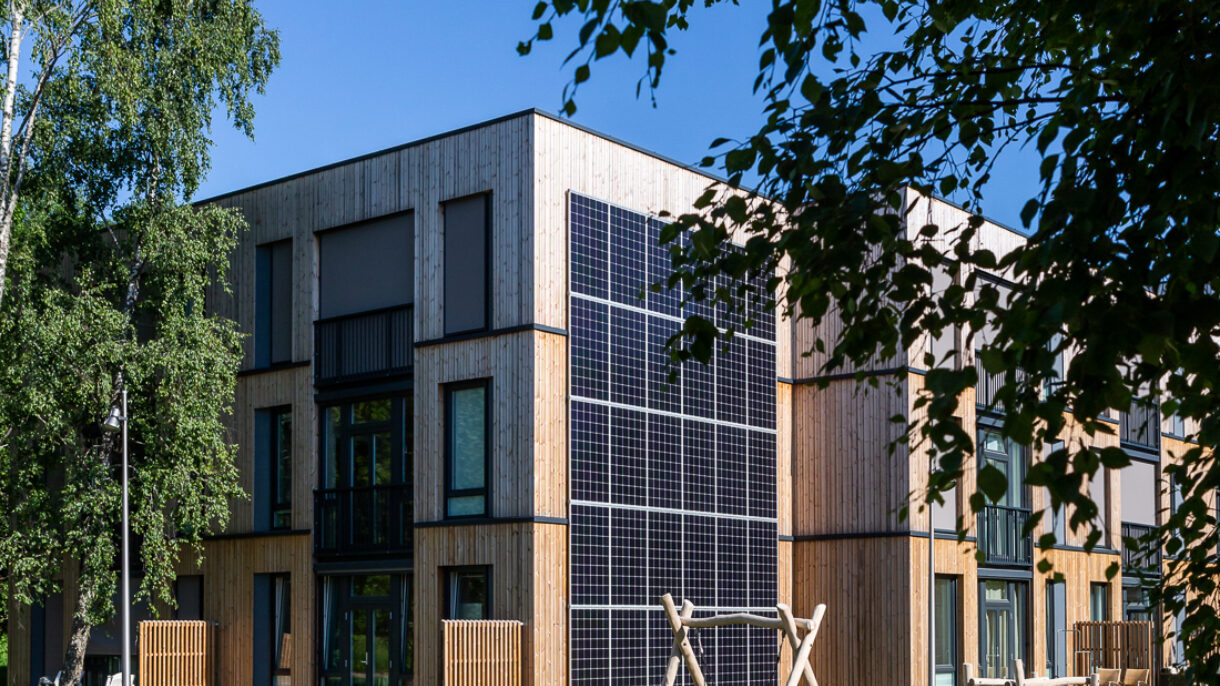
Three single-storey buildings with flats for students with families. Cross-laminated timber construction, solar panels, grey water recycling, and local geothermal heating are all features that fit the student village’s green identity.
Developer
Studentsamskipnaden i Oslo og Akershus
Municipality
Oslo
Architect
LMR arkitektur
Environmental Consultant
Civitas
Landscape Architect
LMR arkitektur
Status
Completed (2020)
Project description
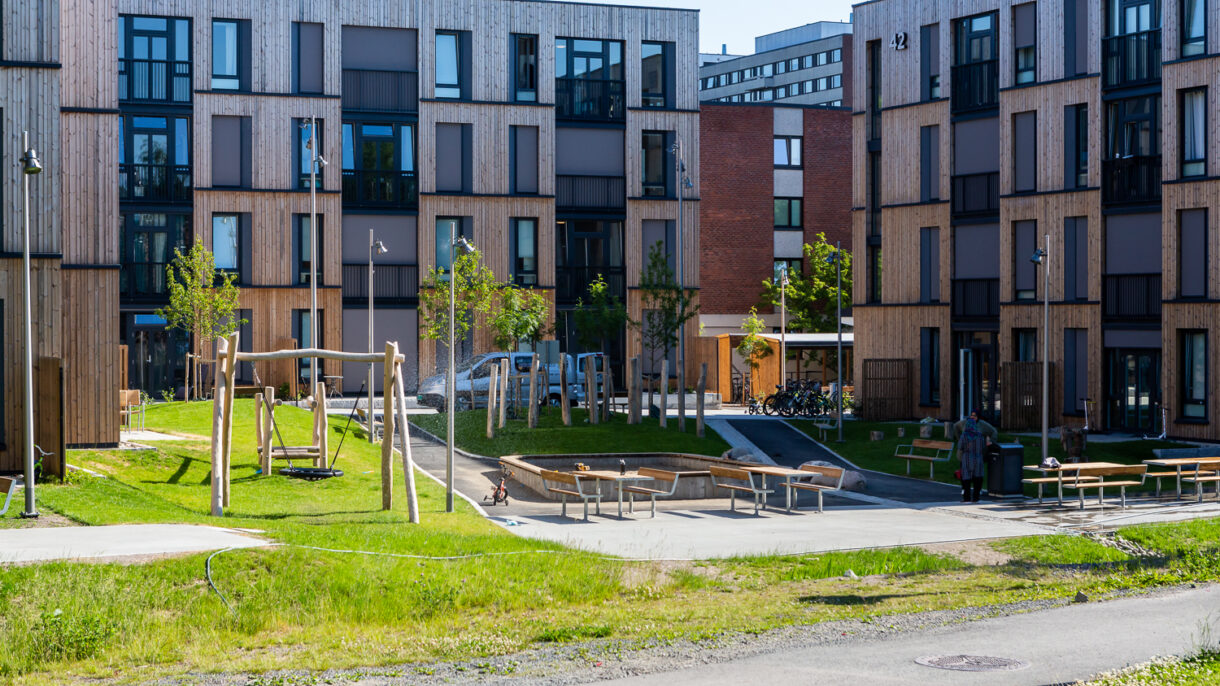
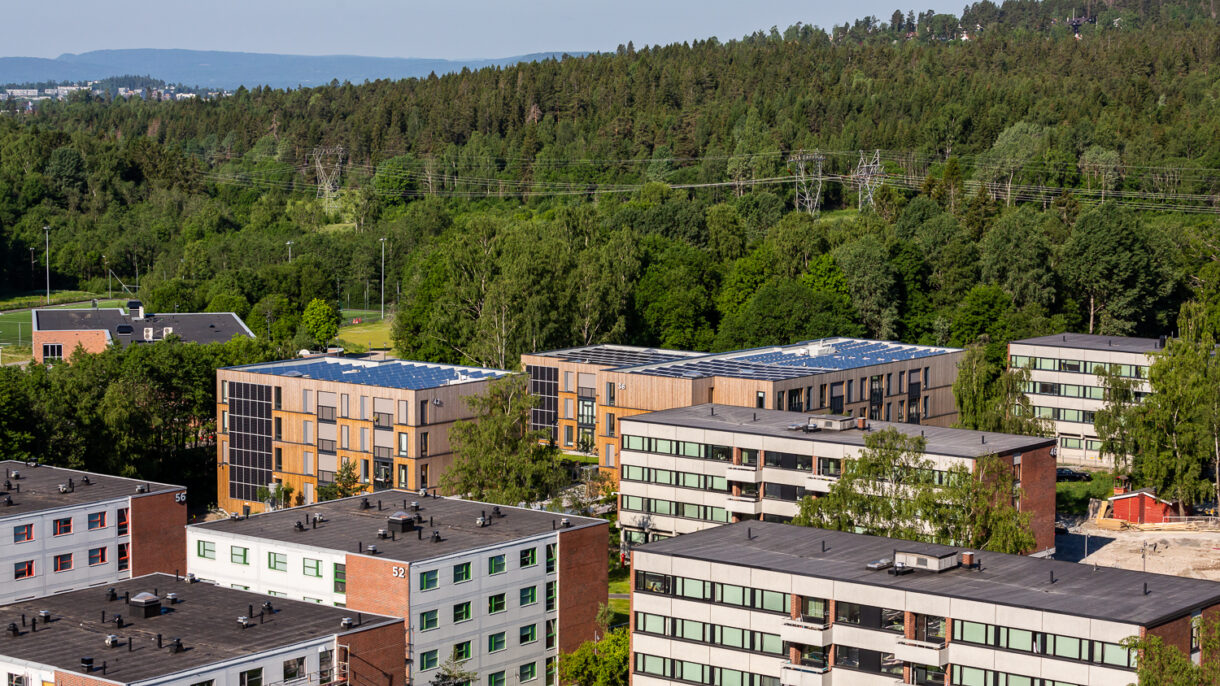
In January 2020, Kringsjå Student Village added 82 new flats for students with families. The insights from the student flats that were completed in 2017 were incorporated when the new family flats were being developed. The units are each three-room flats of 50 m2, distributed across three buildings that are either three or four storeys tall. The flats are located on the outskirts of the student village and are nearby the local metro stop, fitness centre, grocer’s shop, café, and forest. The buildings form a courtyard where benches, a grilling space, a sandbox, and playground equipment have been installed.
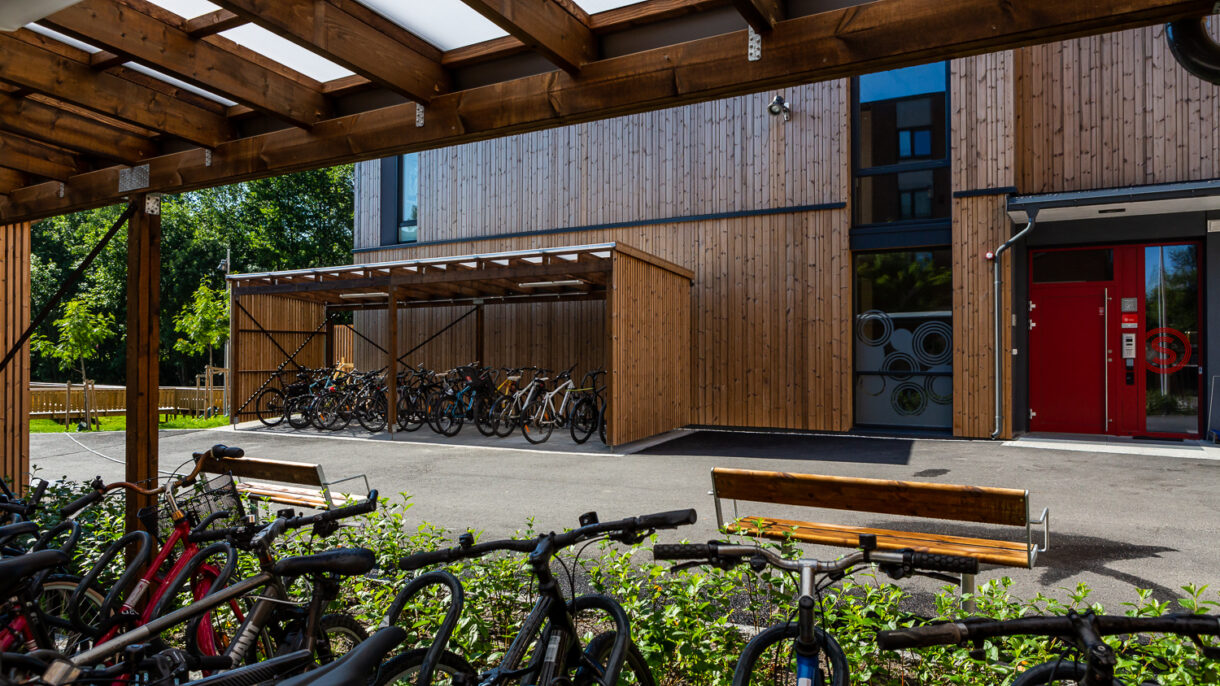
Greenhouse gas emissions have been cut, in part by using low-carbon materials, energy-efficient lighting, and on-site electricity and heating production, following a passive house standard with low energy needs, and by facilitating parking places for bikes rather than cars.
The project’s greenhouse gas emissions were calculated for the “planned” and “as built” phases and compared with an adapted reference, showing a 67.7 per cent reduction for the planned building and a 73.6 per cent reduction for “as built”; this includes the export of self-produced energy. For “as built”, the greenhouse gas emissions from transport related to the use of the buildings were reduced by 41 per cent compared with the adapted reference building, and from energy by 54 per cent. This was achieved through energy-efficiency measures, self-produced energy, and heat recovery; this does not include the export of energy.
Because of the installed solar panels, solar collectors, and geothermal wells, the material-related emissions for “as built” are higher than the adapted reference building.
The buildings achieve a ZEB-COM level. That is to say that the self-produced, renewable energy compensates for the emissions stemming from the buildings’ construction phase, materials, and energy usage.
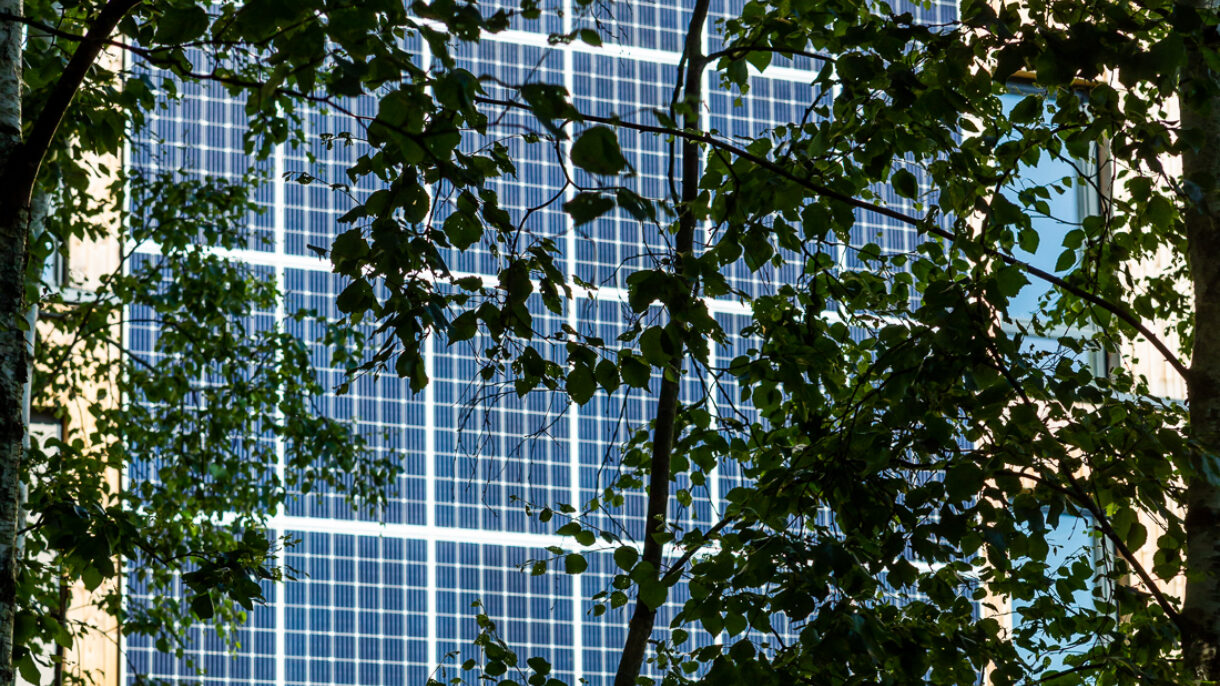
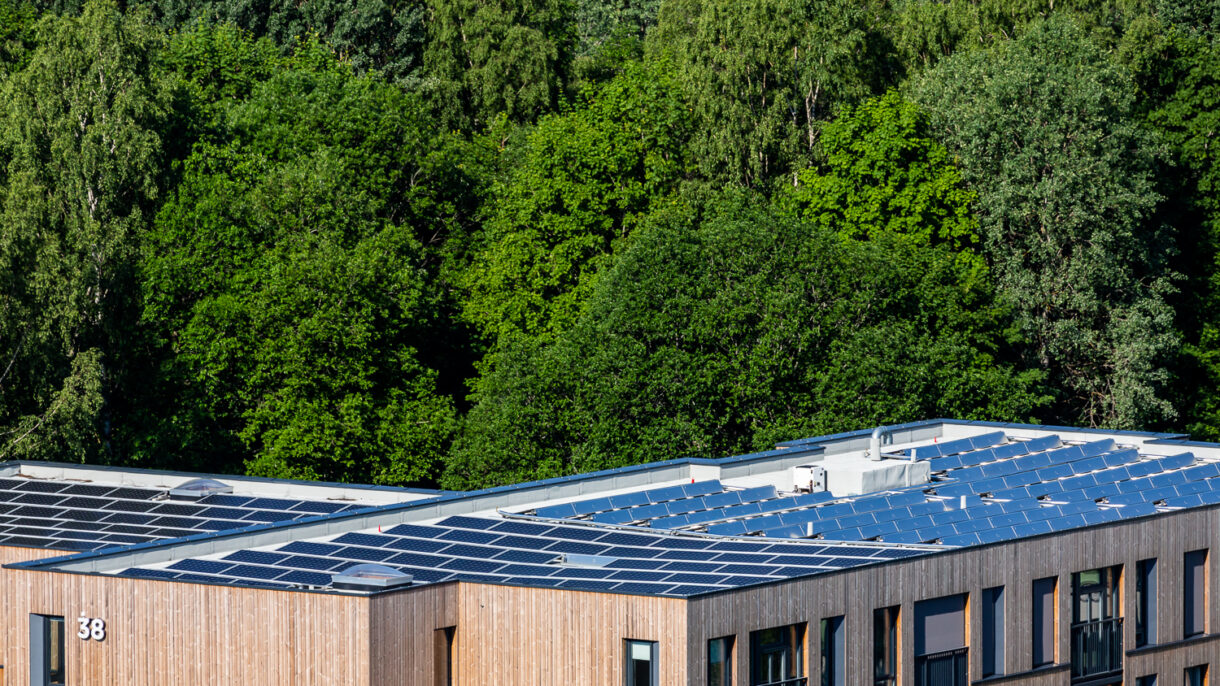
Solar panels have been installed on the roof and on two of the façades to generate electricity, and 16 new geothermal wells have been drilled on the site to supply the flats with local heat. This local, renewable production of heat and electricity was planned to exceed the needs of the three buildings, and the surplus will be exported to other buildings in the student village.
Low-carbon strategies
Zero emission energy
Test of different PV panels on the roof
Cross-laminated timber construction
Good bicycle facilities
Biodiversity
Stormwater management
Project Information
PROJECT DETAILS
| Address: | Olav M. Troviks vei 38-44, Oslo |
| Municipality: | Oslo |
| Project period: | 2017 - 2020 |
| Status: | Completed (2020) |
| Project type: | New building / addition |
| Exemplar Program: | FutureBuilt |
| Contract practice: | Design and build contract |
PROJECT TEAM
| Client: | Studentsamskipnaden i Oslo og Akershus |
| Architect, Interior-/Landscape Architect: | LMR arkitektur |
| Project Management (PM) | Studentsamskipnaden i Oslo og Akershus |
| Environmental Consultant: | Civitas |
| Counselors: | Erling Bjartnes, Bjørn Jørgensen, Roar Jørgensen, iTre (Massivtre), Brekke&Strand Akustikk, Løvlien Georåd, Bygganalyse |
| Main contractor: | Seby |
Map
Map