Magasinparken secondary school
2023.11.30 11:11
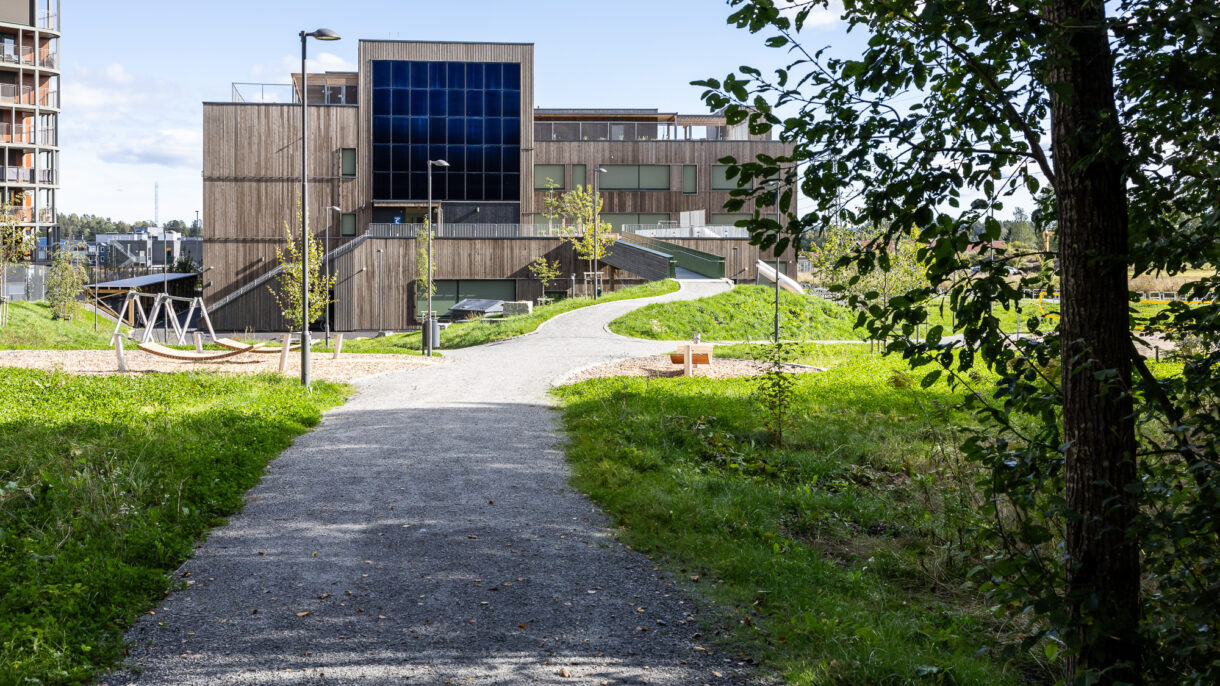
Magasinparken secondary school is designed with a strong emphasis on sustainability and high architectural quality.
Developer
Nordre Follo Municipality
Municipality
Nordre Follo
Architect
Arkitema
Environmental Consultant
HENT
Landscape Architect
Arkitema
Status
Completed (2025)
Project description
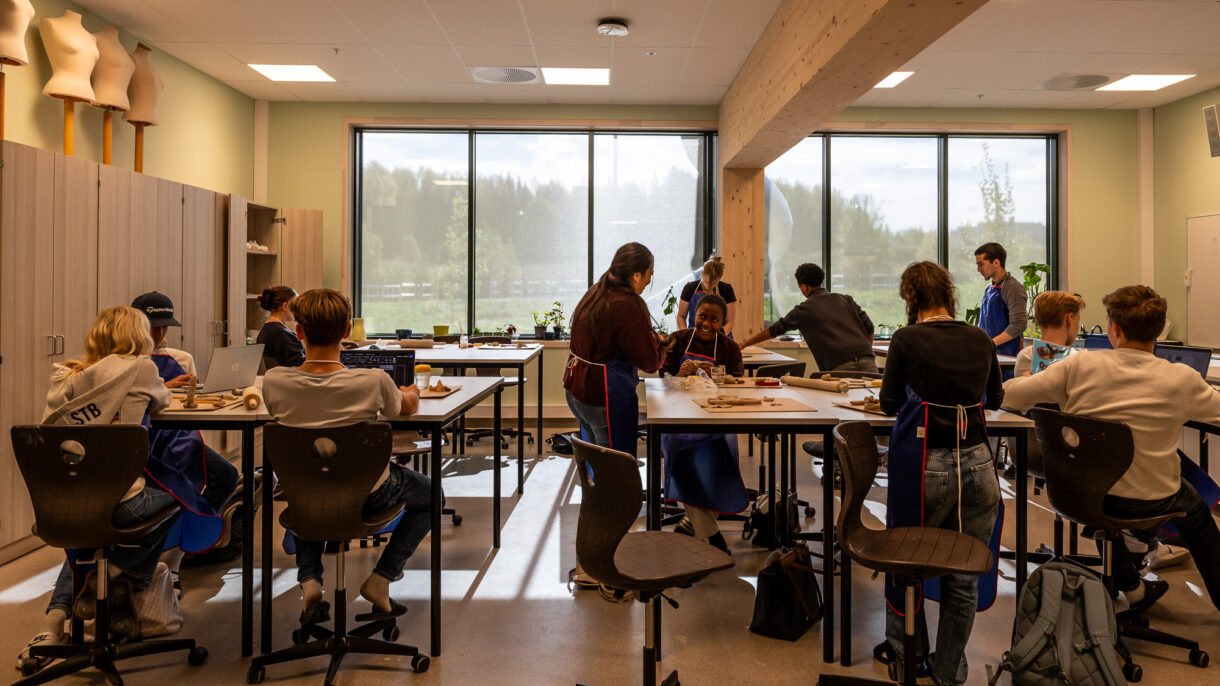
Magasinparken is a new secondary school in Nordre Follo, south of Oslo. The school welcomed its 800 students in august 2025. The FutureBuilt project has achieved a reduction of 50 percent in associated greenhouse gas emissions according to FutureBuilt ZERO, it is a near-zero energy building and meets the requirements of BREEAM NOR Excellent. The project has also been a pilot for testing and developing FutureBuilt's criteria for greenhouse gas calculations for landscapes (ZERO-L).
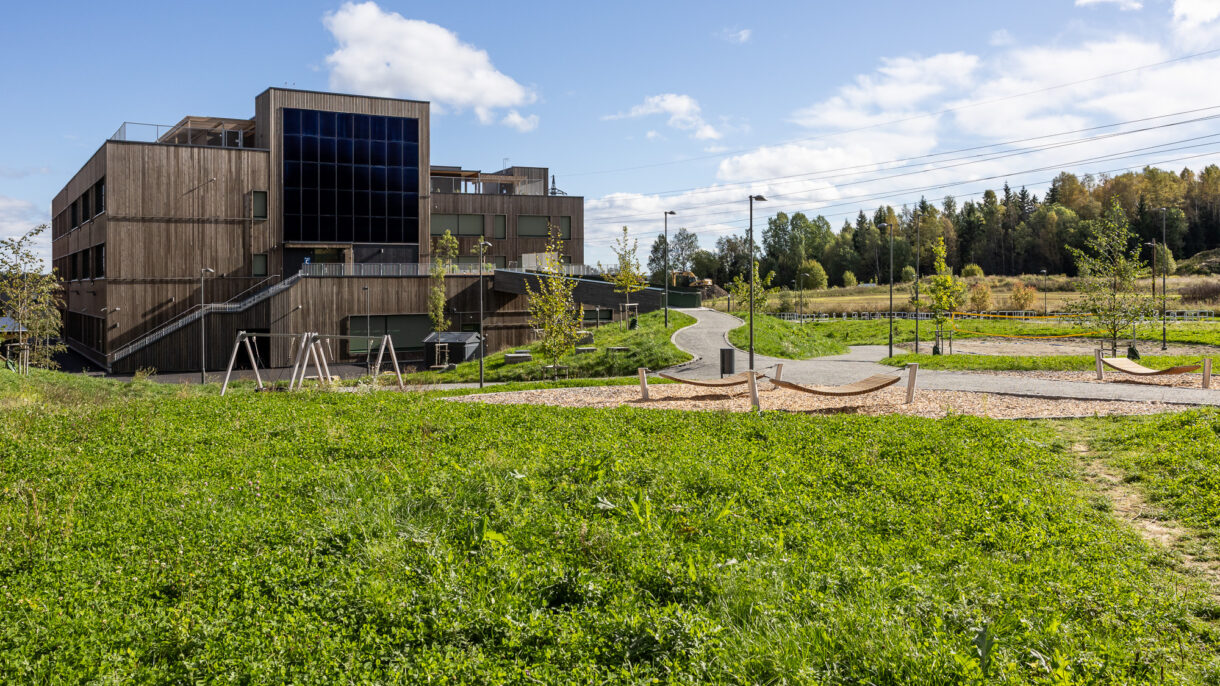
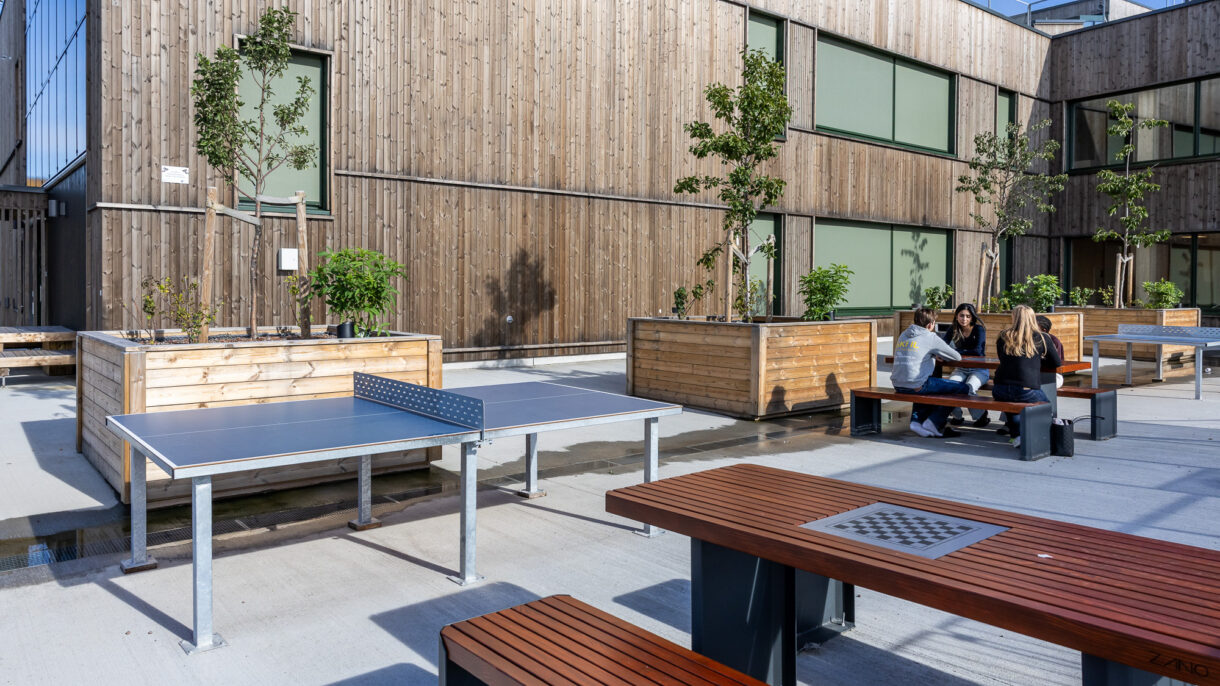
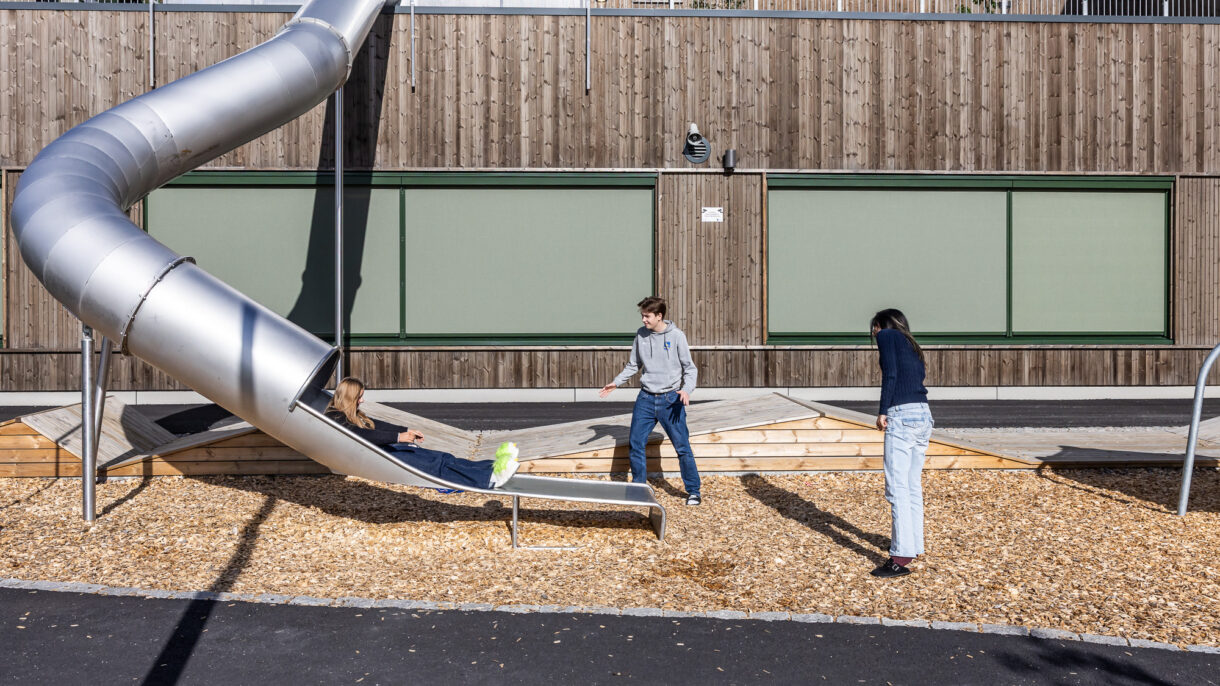
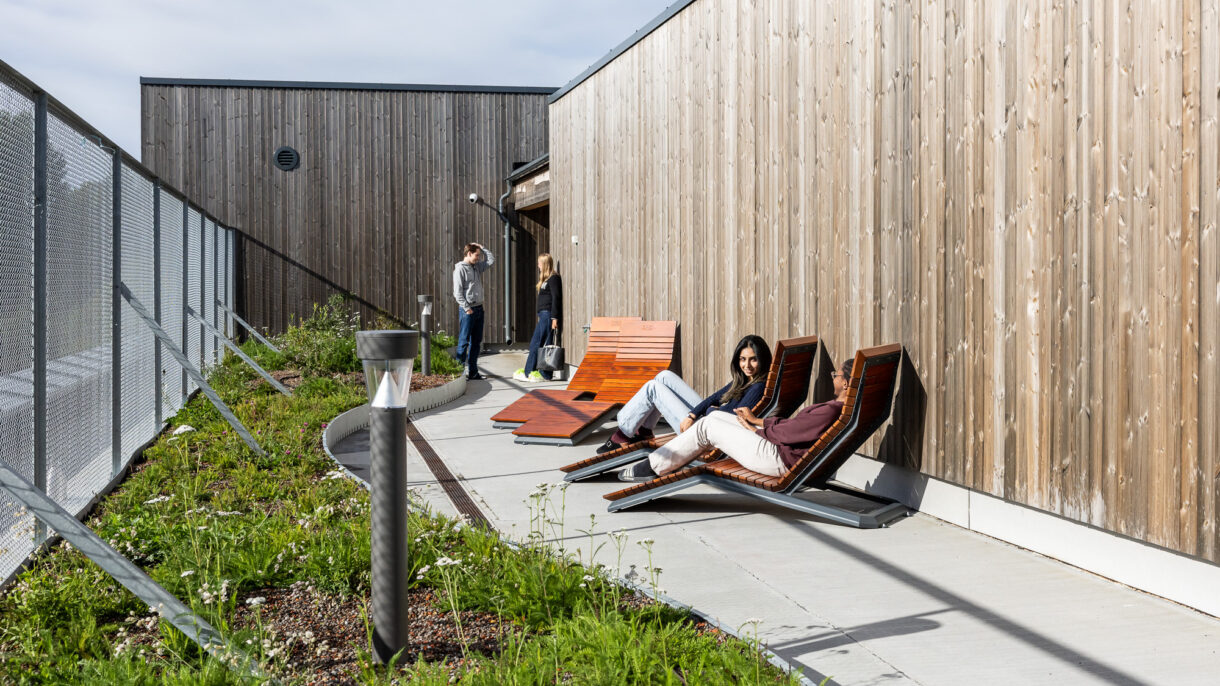
Magasinparken secondary school aims to be more than a traditional school building. The facility includes a neighbourhood park, and the schoolyard is designed to accommodate various activities and cater to different age groups.Part of the roof is accessible outside of school hours, and there is also a tunnel slide from the roof to the ground, already a popular destination in the area.
Environmental measures
Social sustainability, urban environment and architecture
The school is located within walking distance from Ski town centre and the local train station, in between apartment buildings and a nearby forest. With a multi-purpose hall, cultural facilities and outdoor sports fields, the school will play a central role in the development of the local community in Finstad.
In the early stages of the project, participation processes were carried out, including neighbours, organisations and future users. The social sustainability consultants, Byantropologene, summarised the findings in a report that formed the knowledge base for the development of social meeting places and shared functions at the new school. The tunnel slide, which leads from the school roof to the ground, is one of the results of the participation process.
Several important architectural premises were identified early in the project. These include:
• The school's outdoor space should be an open neighbourhood park after school hours.
• The school's outdoor space should enhance the existing blue-green qualities of the area.
• the roof space should be accessible – also after school hours
• rooms that were available for loan/rent after school hours should be located on the ground floor
• the roof surfaces should be a ‘fifth façade’ and look good for neighbours with a view of the school
Climate – FutureBuilt ZERO
Greenhouse gas calculations from the construction phase shows that the project has achieved a reduction that are lower than the required threshold (FutureBuilt ZERO).
Cuts in emissions have been a central part of the project from the onset, affecting the choice of concept and design both in terms of energy and materials.
The choices of energy systems and materials include
• Cross-laminated timber and gluelam
• Low-carbon concrete class A has been used for all in-situ concrete, and the design has been optimised to reduce the amount of concrete used.
• Wood is used as external cladding, linoleum covers a large part of the floors and low-emission plasterboard for the walls
• Solar panels on roof and facades, and ground source heat pumps
Good cooperation and openness between the client, the main contractor and the architects have been crucial to achieving the project's goals. It has also been important to continuously monitor emissions in the choice of materials and products.
Landscape ZERO-L
The project is among the first to work with FutureBuilt ZERO-L criteria for greenhouse gas calculations for landscapes. Several findings from the early calculations for landscapes have influenced the choice of materials and design in later phases.
Generally, it is the materials used in outdoor spaces that constitute the main source of greenhouse gas emissions in landscape projects. The production and transportation of natural stone often have a significant impact, as stone used in Norwegian construction projects is often sourced from Asia. Consequently, this project specified that stone should be Norwegian, preferably sourced locally. Snow removal can be a considerable source of emissions. To address this, a plan was developed to minimize the areas requiring clearing and consequently reduce emissions.
Green mobility / FutureBuilt ZERO-T
The calculation performed in the pre-project showed that greenhouse gas emissions from transport during operation would be reduced by 49 percent due to the location and limited parking spaces. The project has planned several measures to further reduce emissions from transportation, including good facilities for cycling.
Biodiversity
The design of Magasinparken was based on the first version of FutureBuilt’s criteria for biodiversity. Existing vegetation on the site was surveyed by an ecologist. The landscape plan was developed based on the survey and in consultation with the ecologist. A plant list for the project required for Norwegian-produced plants and Norwegian seed sources where possible. Plants must be approved by the ecologist and the developer before planting. From the outset, the project has been based on the principle of preserving and establishing as much nature as possible.
The outdoor areas can be roughly divided into four main areas:
• The existing forest northwest of the site will largely be preserved as it is, with the exception of weeding out alien species and thinning out small trees.
• In areas where heavy traffic is expected, extensively managed grasslands will be established. Norwegian deciduous trees will also be planted here, which may also have educational potential.
• The outdoor areas also include a willow and sedge meadow where efforts have been made to find suitable native species. Wet meadows are not necessarily the most suitable type of habitat for recreation, but this field is located under a high-voltage power line where recreation is not planned anyway. This area will also handle stormwater.
• All roof areas are designed for recreation. Here, dry meadows composed of native, flowering meadow plants are established. The roof gardens are very similar to a traditional green roof, but here a more generous soil depth has been provided, which allows for taller and more multi-layered vegetation to be planted.
The project has also drawn up a plan for dealing with alien species and a management plan describing how the facility should be maintained in a way that promotes biodiversity.
A soil protection plan has ensured that existing vegetation and the local stream were protected during construction.
Translated with help from DeepL.com (free version)