Østensjøveien 27, Oslo
2021.01.05 10:25
The sustainable office building has been designed based on a holistic idea, containing everything from daylight ratio spatiality and sustainable materials to the positioning in the vicinity of public transport. The building has also been designed with enough flexibility to turn it into housing facilities.
Developer
NCC Property Development
Municipality
Oslo
Architect
Henning Larsen Architects
Environmental Consultant
PK3 landskabsarkitekter
Costs and support
187.5 MNOK. Project support Enova: ca. 4.8 MNOK.
Status
Completed (2013)
Project description
Østensjøveien 27 lies centrally at Bryn in Oslo. The building is designed by Danish Henning Larsen Architects and is the result of an invited architect competition with a focus on energy efficiency and good office solutions. Enjoyment, effectiveness and flexibility are keywords for the building, which meets tomorrow´s requirements for a modern workspace. NCC Property Development, with NCC Construction as the design-build contractor, developed the project. Østensjøveien 27 was sold soon after completion, and NCC now rents about half the area. The rest of the office space is rented to other organisations.
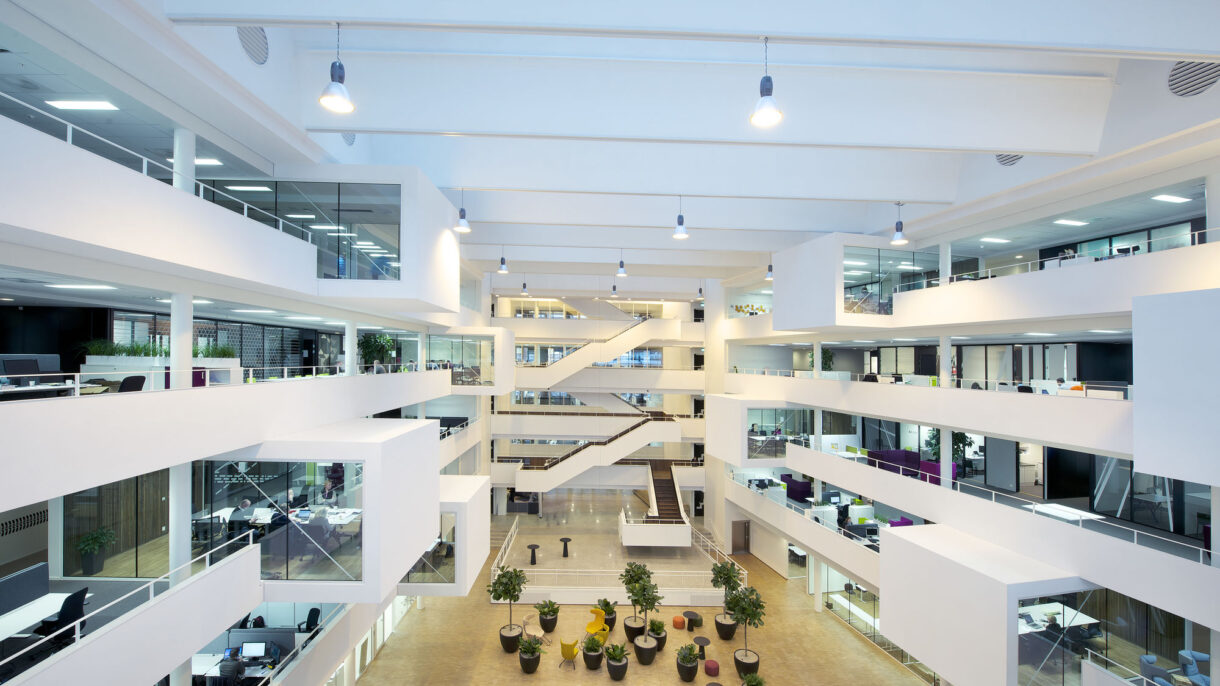
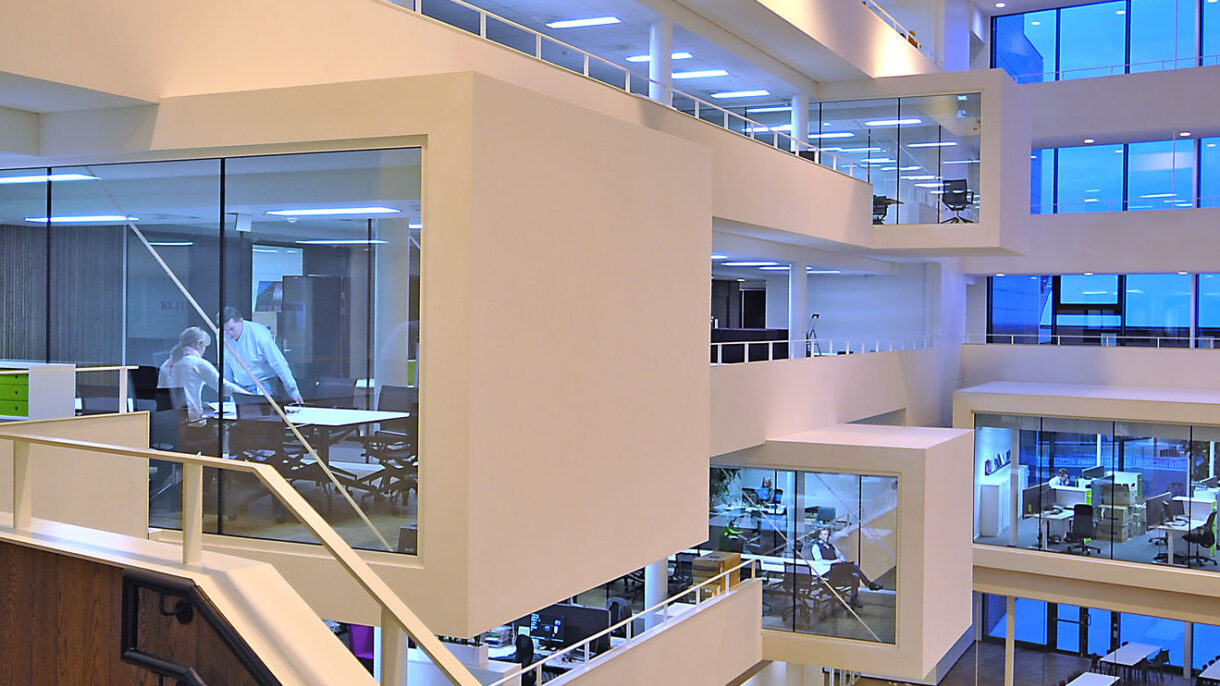
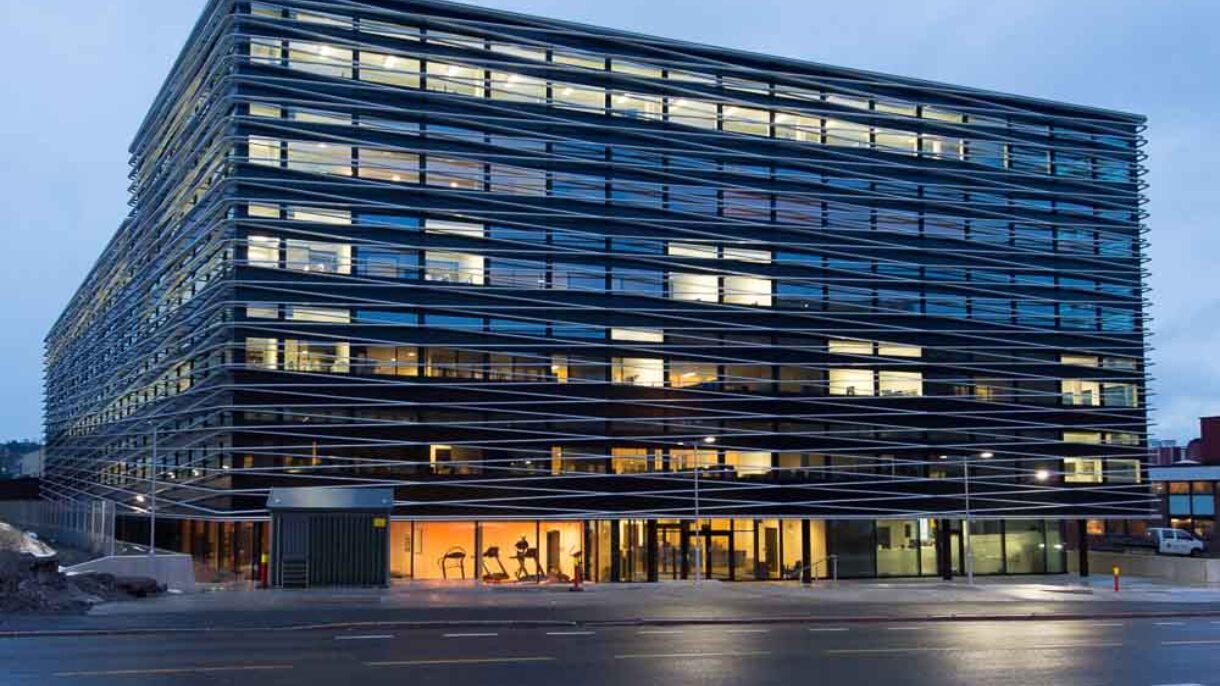
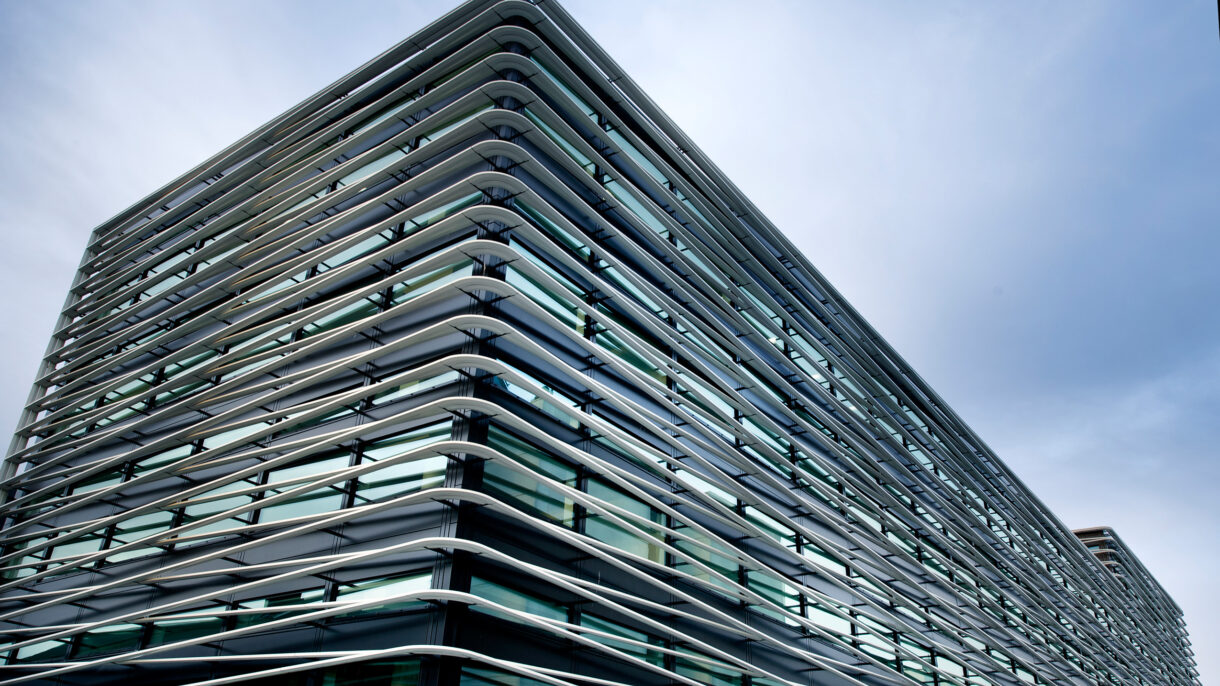
The building is set back from Østensjøveien, which is zoned as a traffic calmed street by Oslo´s city council. The building has an area of 16.800 m² and consists of two six-storey office wings, including the basement level with car and bicycle parking, storage and technical space. The wings are connected to each other by a large glass-covered atrium that functions as a meeting space for employees. In the first storey there is also a meeting centre and an exercise room. The office storeys are built up around the atrium with meeting rooms that open to the atrium. The office areas are a mixture of open office landscape and cellular offices. The solar screening contributes to the character and identity of the building. The façade elements also function as a solar shelf, reflecting light into each floor.
The project was completed as a design-build contract. The building is a part of FutureBuilt and is an example project within BREEAM NOR.
Low carbon strategies
The greenhouse gas emissions for the “as built” stage are reduced by 30 percent compared to the reference building. The reduction of greenhouse gas emissions from energy use is 61 percent and for material use 50 percent, while for transport the reduction is only 4 percent. If the transport emissions are compared with NCC´s old office building at Helsfyr the reduction is 32 percent. That results in a total reduction in greenhouse gas emissions of 42 percent. An important climate initiative has been a compact building and simple building geometry.
The building is designed and built according to passive house criteria. The airtightness of the building fabric is an impressive 0.35 air changes per hour. The load-bearing structure is positioned inside the insulated facades, which reduces the problems with both cold bridges and air leakages. The ventilation units on the roof have two circuits each, with the possibility of using different supply air temperatures near the façade and further into the building. Most of the ventilation units also have rotating heat exchangers, which give very good heat recovery. Energy efficient fans and minimal pressure loss in the ventilation ducts results in a low SFP-factor. Demand control of ventilation and lighting contributes to a low energy consumption.
The project has worked to minimize material use and select products with low greenhouse gas emissions. The compact building form and an optimized geometry with continuous office landscape and an absence of corridors ensures that material use is minimized. Low-carbon concrete and recycled steel are used in the load bearing structure, and prefabricated façades optimize material use and reduce wastage.
Østensjøveien 27 is 350 metres from Helsfyr, where there is a metro station as well as good bus connections. The building has good access to the bicycle network and has facilitated cycling with 100 lockers and 120 bicycle parking places inside and out. There is also a training room centrally located by the entrance with its own shower facilities. The building has 72 car parking places, whereof over 20 are prepared for electric cars. The main tenant has planned its own electric car pool with three cars that are booked through Outlook. They have also implemented travel surveys and will implement initiatives that motivate higher use of public transport and bicycles.
Read the architects´ description of Østensjøveien 27 here.
Key Figures
AREA COVERAGE
13500 m² (Net heated area)
| Area BRA | 13500 m2 |
| Heated area BRA | 13500 m2 |
GREENHOUSE GAS ACCOUNTING
| Reference | Project | Done | Operates | |
| Energy | 14 | — | 5 | 5 |
| Material use | 10 | — | 5 | 5 |
| Transportation | 25 | — | 24 | 24 |
ENERGY
| Energy sources: | Heat pump water-water, district and local heating system, solar thermal collectors (DHW) |
COSTS AND SUPPORT
187.5 MNOK. Project support Enova: ca. 4.8 MNOK.
| Price per square meter: | 13890 kr/m2 |
| Additional costs energy: | 1350 kr/m2 |
| Project support Enova: | 4800000 kr |
Project Information
PROJECT DETAILS
| Address: | Østensjøveien 27, 0661 Oslo Helsfyr |
| Municipality: | Oslo |
| Project period: | 2010 - 2013 |
| Status: | Completed (2013) |
| Project type: | New building / addition |
| Function / Building type: | Office building, Housing area / housing development |
| Environmental standard: | Passive house standard |
| Exemplar Program: | FutureBuilt, BREEAM-NOR piloter |
PROJECT TEAM
| Client: | NCC Property Development AS |
| Architect: | Henning Larsen Architects AS | PK3 landskabsarkitekter |
| Project Management (PM) | NCC Property Development AS |
| Special Adviser energy: | Rambøll AS |
| Counselors: | Rambøll AS |