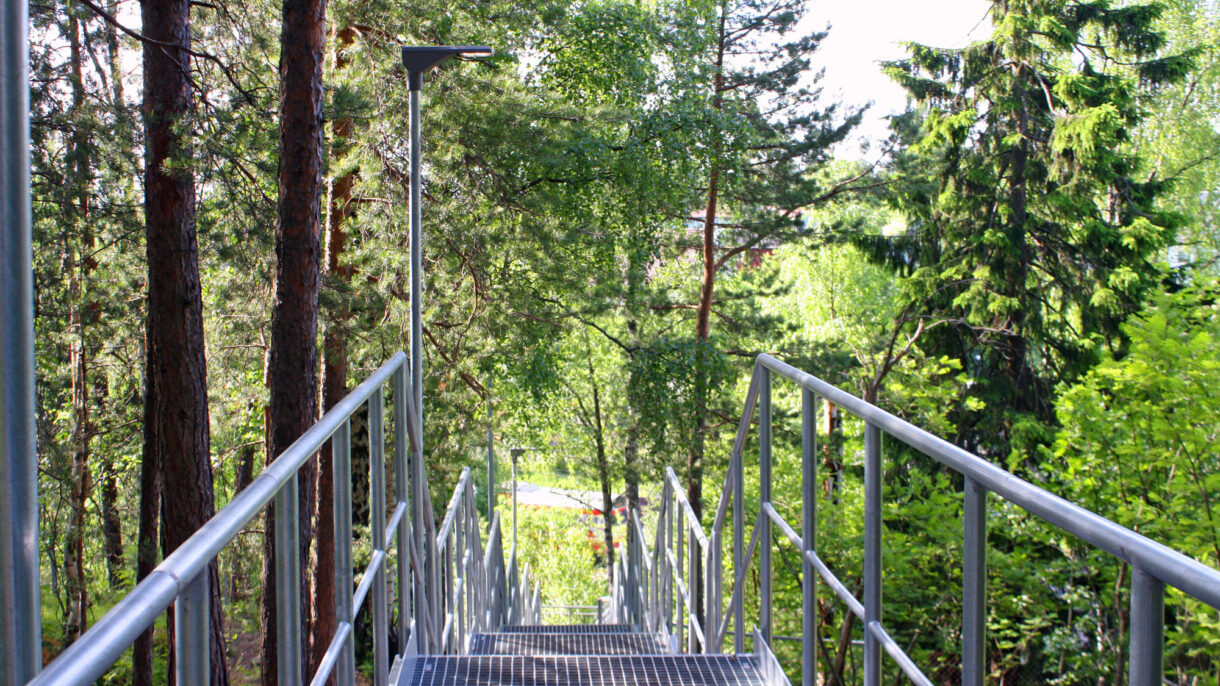
Stasjonsfjellet School, Oslo
2019.06.04 10:33
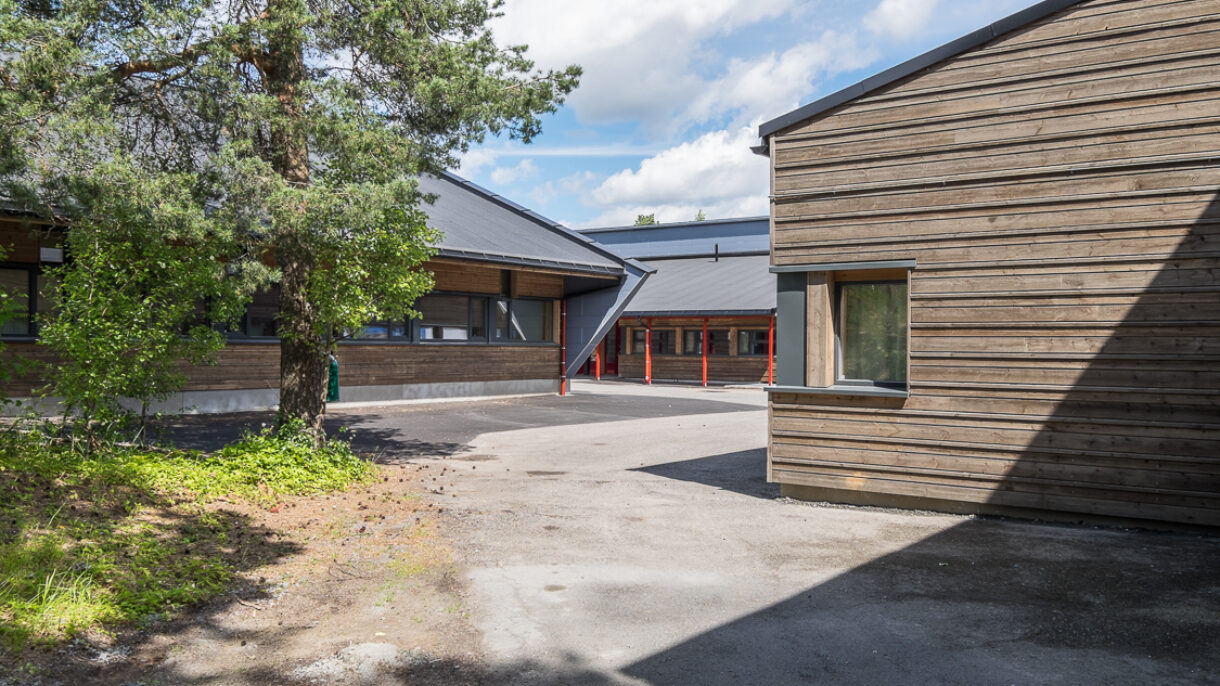
Stasjonsfjellet School in Groruddalen in Oslo is one of the country´s first schools rehabilitated to passive house standard.
Developer
Undervisningsbygg Oslo
Municipality
Oslo
Architect
Heggelund og Koxvold Arkitekter
Environmental Consultant
Undervisningsbygg Oslo
Costs and support
Support Enova: 1,92 MNOK.
Status
Completed (2014)
Project description
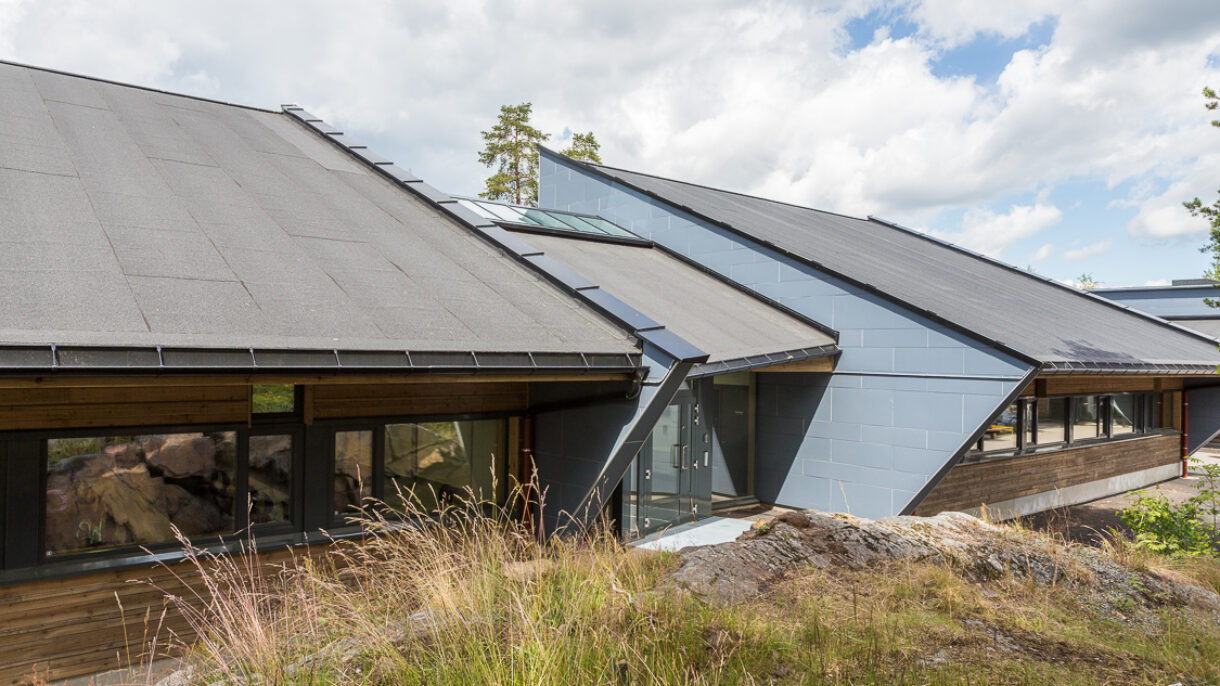
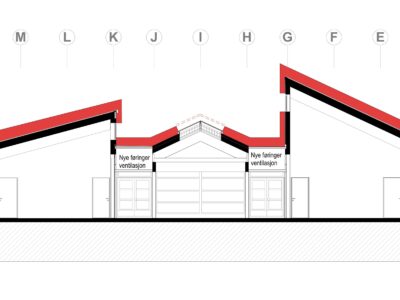
The outer skin was upgraded as part of the rehabilitation, and one objective was to achieve the lowest possible heat loss. The roof and facades were insulated internally to achieve a U-value of 0.10 W/m2K. All windows were replaced with highly insulating windows (U-value of 0,8 W/m2K). The buildings had a steep roof with an atrium in glass, which also was replaced. Reduction of cold bridges was prioritized, as well as high air tightness values to minimize heat loss. Cold bridges along the foundations were especially difficult to improve in a rehabilitation project like this, but additional insulation limited the heat loss in this area.
The building program set high demands for the air quantities. The ventilation system was entirely replaced, and the new system will be demand controlled by C02 and temperature sensors, which can be controlled with an SD-system. The heat recovery units are mainly rotating with a yearly average minimum effectiveness of 80 per cent, with the exception of the required plate heat exchanger in the art and workshop, school kitchen and science rooms. A building control system that is suitable for a passive house building is installed. The electric heating system is replaced by waterborne heating with radiators. A heat pump system with energy wells in the ground (geothermal) will deliver the heat.
The project does not meet all passive house requirements in relation to the standard, but the total energy requirement is significantly reduced. The school has gone from direct electrical heating to water borne heat with a heat pump and will therefore reduce its greenhouse gas emissions.
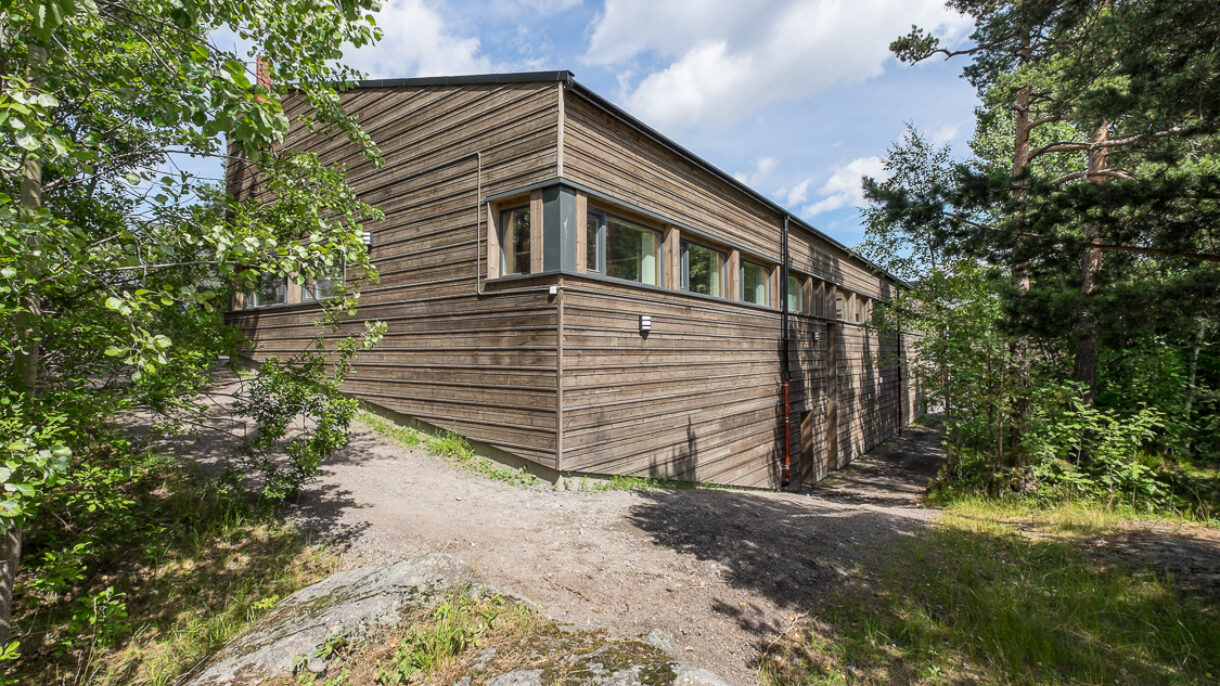
All new reinforcement bars now consist entirely of recycled steel, and structural steel contains a minimum of 40 per cent recycled steel. The existing painted wood cladding is replaced with untreated heartwood of pine. Otherwise there are few replacements of the interior cladding and materials. Products that contain hazardous or environmentally damaging chemicals on the Norwegian “priority list” and “candidate list” are avoided as long as there are alternatives.
Low carbon strategies
Stasjonsfjellet School is designed according to FutureBuilt´s criteria of at least a 50 per cent reduction of greenhouse gas emissions compared to today´s standard.
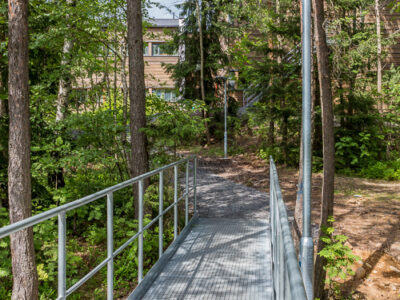
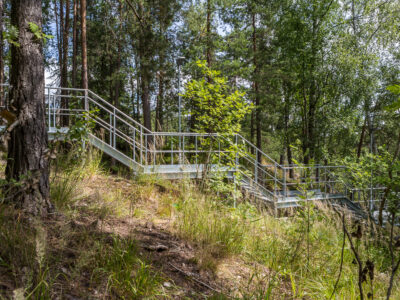
The school lies about a 3 minutes´ walk from Høybråten train station, and a forest path from the train station to the school has been improved in connection with the rehabilitation. However, most pupils come to school on foot or by bicycle. There is a maximum of 10 parking places by the school, and although the amount of pupils rose when the school was rehabilitated, the number didn´t increase.
The outer skin was upgraded as part of the rehabilitation, and one objective was to achieve the lowest possible heat loss. The roof and facades were insulated internally to achieve a U-value of 0.10 W/m2K. All windows were replaced with highly insulating windows (U-value of 0,8 W/m2K). The buildings had a steep roof with an atrium in glass, which also was replaced. Reduction of cold bridges was prioritized, as well as high air tightness values to minimize heat loss. Cold bridges along the foundations were especially difficult to improve in a rehabilitation project like this, but additional insulation limited the heat loss in this area.
The building program set high demands for the air quantities. The ventilation system was entirely replaced, and the new system will be demand controlled by C02 and temperature sensors, which can be controlled with an SD-system. The heat recovery units are mainly rotating with a yearly average minimum effectiveness of 80 per cent, with the exception of the required plate heat exchanger in the art and workshop, school kitchen and science rooms. A building control system that is suitable for a passive house building is installed. The electric heating system is replaced by waterborne heating with radiators. A heat pump system with energy wells in the ground (geothermal) delivers the heat.
The project does not meet all passive house requirements in relation to the standard, but the total energy requirement is significantly reduced. The school has gone from direct electrical heating to water borne heat with a heat pump and will therefore reduce its greenhouse gas emissions.
All new reinforcement bars now consist entirely of recycled steel, and structural steel contains a minimum of 40 per cent recycled steel. The existing painted wood cladding is replaced with untreated heartwood of pine. Otherwise there are few replacements of the interior cladding and materials. Products that contain hazardous or environmentally damaging chemicals on the Norwegian “priority list” and “candidate list” are avoided as long as there are alternatives.
Environmental Measures
Bymiljø og arkitektur
Stasjonsfjellet skole ligger på en skogkledt kolle nær Høybråten stasjon. Områdets topografi gjorde videre utbygging av skolen svært begrenset. Nybyggets plassering og form ble valgt ut fra et ønske om å opprettholde skolens ballplass og uterom, og for å unngå kostnadskrevende utsprenging og grunnarbeider.
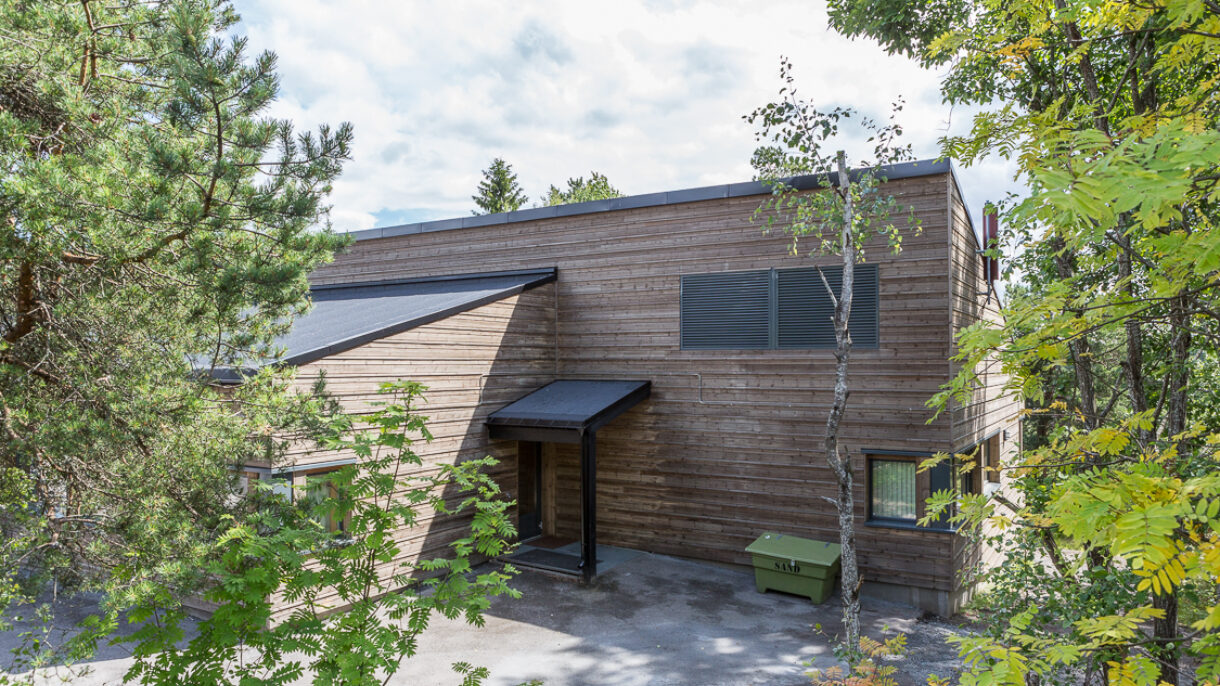
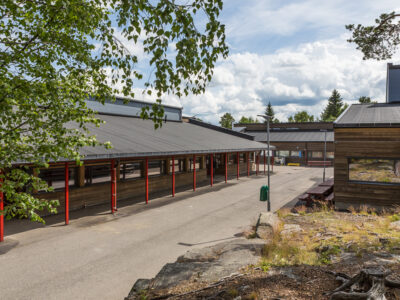
I rehabiliteringen ble det lagt vekt på å beholde skolens opprinnelige uttrykk og formspråk. Skolen har fått en ytterkledning i jernvitrolbehandlet malmfuru som ikke trenger vedlikehold. Deler av nybygget er kledd med laminatplater for å variere det arkitektonisk uttrykket.
Klimagassutslipp
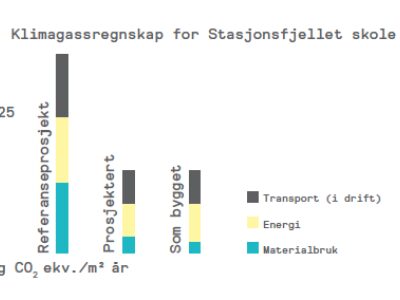
Prosjekt Stasjonsfjellet skole ble prosjektert etter FutureBuilt-kriteriet om minst 50 prosent reduksjon av klimagassutslipp sammenlignet med dagens standard. Det er utarbeidet et klimagassregnskap som dekker områdene transport i drift, stasjonær energi og materialbruk.
Klimagassregnskapet er utarbeidet delvis i www.klimagassregnskap.no, og delvis i eget regneark. De siste beregningene i klimagassregnskap.no er utarbeidet i versjon 4.
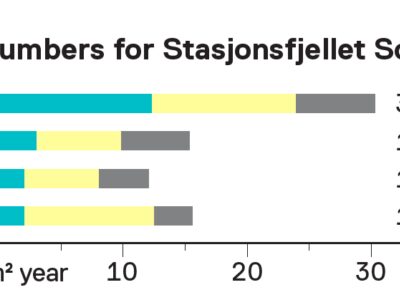
Klimagassutslippet for "prosjektert" er redusert med 49 prosent, "som bygget" med 60 prosent og "i drift" med 49 prosent sammenlignet med referansebygget som er beregnet etter TEK10.
Fra materialbruk er prosjektets klimagassutslipp redusert med 82 prosent, og for energibruk er klimagassutslippet redusert med 11 prosent. Utslipp fra transport er redusert med 51 prosent.
Utslippsreduksjonen for materialbruk er svært høy ettersom størsteparten av prosjektet består av rehabilitering av bygningskroppen, og da også kun klimaskjermen. Innvendig har det kun vært enklere justeringer samt tilpasninger ifm nye ventilasjonskanaler. Data for energi i "i drift" modulen er basert på reelt (målt) energiforbruk.
De viktigste klimatiltakene for både nybygg og rehabiliteringen er:
Godt isolert bygningskropp med liten luftlekkasje
Vedlikeholdsfri fasade med lave klimagassutslipp
Overgang fra direkte elektrisk oppvarming til vannbåren varme med bruk av varmepumpe
Ny trapp til skolen fra togstasjon
Areal og transport
Stasjonsfjellet skole ligger få minutters gange fra Høybråten togstasjon. De fleste elevene på Stasjonsfjellet skole går eller sykler til skolen. Flesteparten av elevene bor på den andre siden av togtraseen, og den enkleste veien er broen over togstasjonen og derfra opp til skolen. Prosjektet har derfor bygd en ny trapp fra togstasjonen opp til skolen.
Det var kun 10 bilparkeringsplasser på skolen, og dette antallet ble ikke økt i forbindelse med kapasitetsutvidelsen. To av plassene er forbeholdt el-biler.
Energi
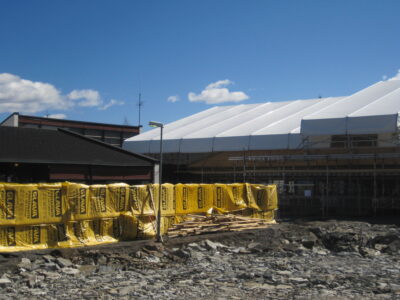
Vegger og tak på skolen er tilleggsisolert fra utsiden og har fått nye vinduer og dører. Bygget har også fått nytt ventilasjonsanlegg. Nybygget er prosjektert etter krav i passivhusstandarden NS3701. Lufttetteheten på nybygget er målt til 0,3 luftvekslinger per time, noe som ligger godt under kravet for på 0,6 for passivhus.
De elektriske panelovnene er erstattet med radiatorer. En brønnpark med sju brønner og varmepume dekker 80 prosent av behovet til oppvarming og varmtvann. Med god styring av ventilasjon, varme og belysning vil energiforbruket på eksisterende skole kunne reduseres med 50 prosent.
Konstruksjoner og materialbruk
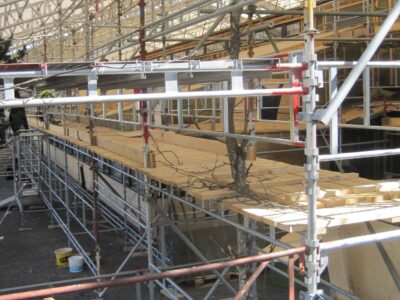
Siden isolasjonen skulle henge utenpå eksisterende veggliv, ble det brukt tradisjonell isolasjon. Ytterkledningen var opprinnelig malt trekledning. Det er valgt en fasade i kjerneved av malmfuru som er behandlet med jernvitrol.
I nybygget er det valgt samme kledning, men gavlveggene er kledd med glassfiberarmert kompositt. Innvendig er det eksponerte betongvegger for termisk lagring og økt komfort. Betongen i nybygget har lave klimagassutslipp sammenlignet med tradisjonell betong.
Key Figures
AREA COVERAGE
3663 m² (Net heated area) for 390 students, 35 full time staff.
| Area BTA | 3973 m2 |
| Area BRA | 3663 m2 |
| Heated area BRA | 3663 m2 |
| Number of residents/users | 425 |
| Glass share | 17 % |
| Compact clergy factor | 0,324 m3 volume/m2 |
GREENHOUSE GAS ACCOUNTING
| Reference | Project | Done | Operates | |
| Energy | 12 | 6,1 | 6,9 | — |
| Material use | 12,6 | 3,3 | 2,3 | — |
| Transportation | 11,3 | 5,9 | 5,9 | — |
ENERGY
Net energy consumption: 74 kWh/m² year. Delivered energy: 56 kWh/m² year (Calculated according to NS3700/3701). Existing building prior to rehabilitation: 162 kWh/m² year.
| Net energy: | 74 kWh/m2/year (NS3031) |
| 74 kWh/m2/year Passive House standard | |
| Supplied energy is calculated: | 56 kWh/m2/year (NS3031) |
| 56 kWh/m2/year Passive House standard | |
| Energy sources: | Heat pump water-water (80% of heating load), electric boiler for waterborne heating (peak load) |
ENERGY BUDGET
| Space heating: | 19,3 kWh/m2/year |
| Plumbing: | 13,8 kWh/m2/year |
| Hot water: | 10,1 kWh/m2/year |
| Fan operation: | 8,4 kWh/m2/year |
| Pump operation: | 0,5 kWh/m2/year |
| Lighting: | 13,3 kWh/m2/year |
| Technical equipment: | 8,8 kWh/m2/year |
BUILDING TECHNICAL
| U-value roof: | 0,1 average value |
| U-value floor: | 0,23 average value |
| U-value exterior wall: | 0,11 average value |
| U-value window/doors: | 0,85 average value |
| SFP factor ventilation: | 1,5 kW/(m3/s) |
| Varmegjenvinneer ventilation: | 82 % |
TRANSPORTATION
| Nearest welding mac. koll.knutepkt: | 150 m |
| Parking: | 2,14 (Pr. 1000 m2) |
| 0,29 (Pr. Unit/arb.plass) |
COSTS AND SUPPORT
53.2 MNOK (budgeted building cost excl. taxes and site. Extra costs for increased energy standard compared to TEK ’10 are calculated to 5.2 MNOK). Support Enova: 1,92 MNOK.
| Price per square meter: | 14525 kr/m2 |
| Additional costs energy: | 1424 kr/m2 |
| Project support Enova: | 1920000 kr |
Project Information
PROJECT DETAILS
| Address: | Stigenga 310, 0979 Oslo Stovner |
| Municipality: | Oslo |
| Project period: | 2011 - 2014 |
| Status: | Completed (2014) |
| Project type: | Reuse / rehabilitation / transformation, New building / addition |
| Function / Building type: | School / educational facility |
| Environmental standard: | Passive house standard |
| Exemplar Program: | FutureBuilt |
| Competition Form: | Framework agreement |
| Contract practice: | Prime cost contract |
PROJECT TEAM
| Client: | Undervisningsbygg Oslo KF |
| Architect: | Heggelund og Koxvold AS Arkitekter MNAL |
| Originally architect: | Arkitektene MNAL Fosse og Aasen As |
| Project Management (PM) | Undervisningsbygg Oslo KF |
| Environmental Consultant: | Undervisningsbygg Oslo KF |
| Special Adviser energy: | Hjellnes Consult AS |
| Counselors: | Hjellnes Consult AS | Hjellnes Consult AS | Hjellnes Consult AS | Hjellnes Consult AS | Brekke & Strand Akustikk AS | ConSisu AS, Elektro Nettverk Service AS |
| Main contractor: | Oslo Byggentreprenør AS |
| Construction Management: | Byggeadministrasjon AS |
Map
Map