
.jpg "Oppholdsareal | Arkitekt: Kleihues+Schuwerk | Fotograf: Frode Larsen / Nasjonalmuseet")
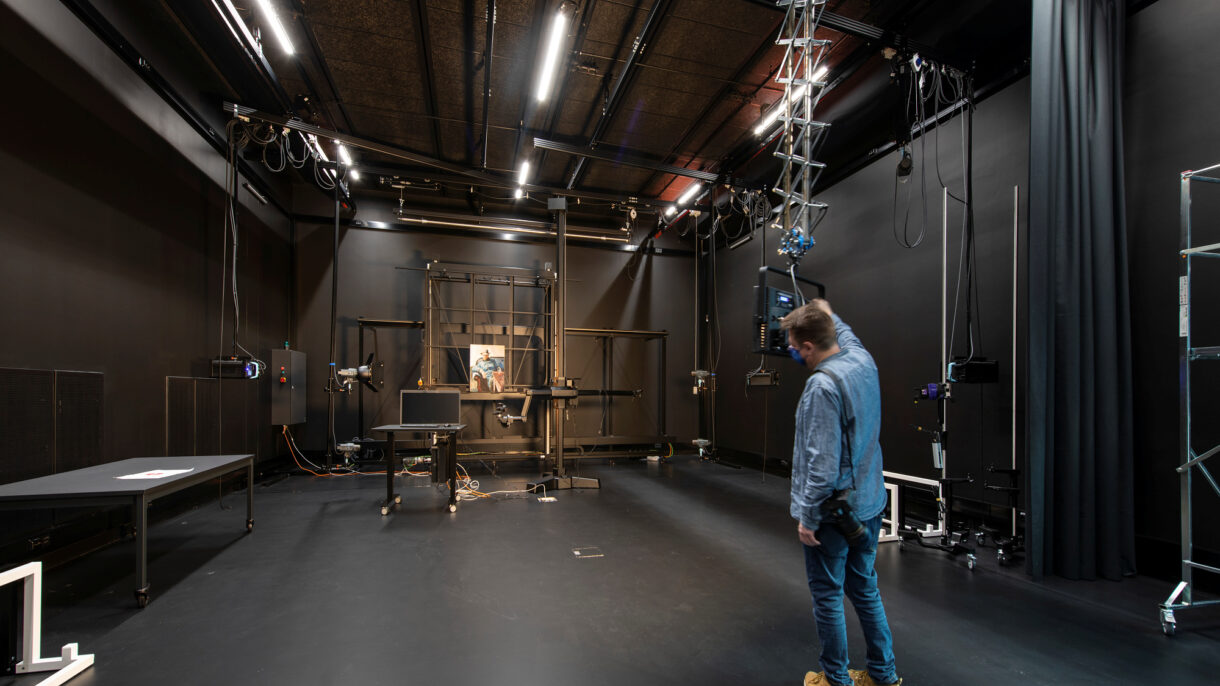
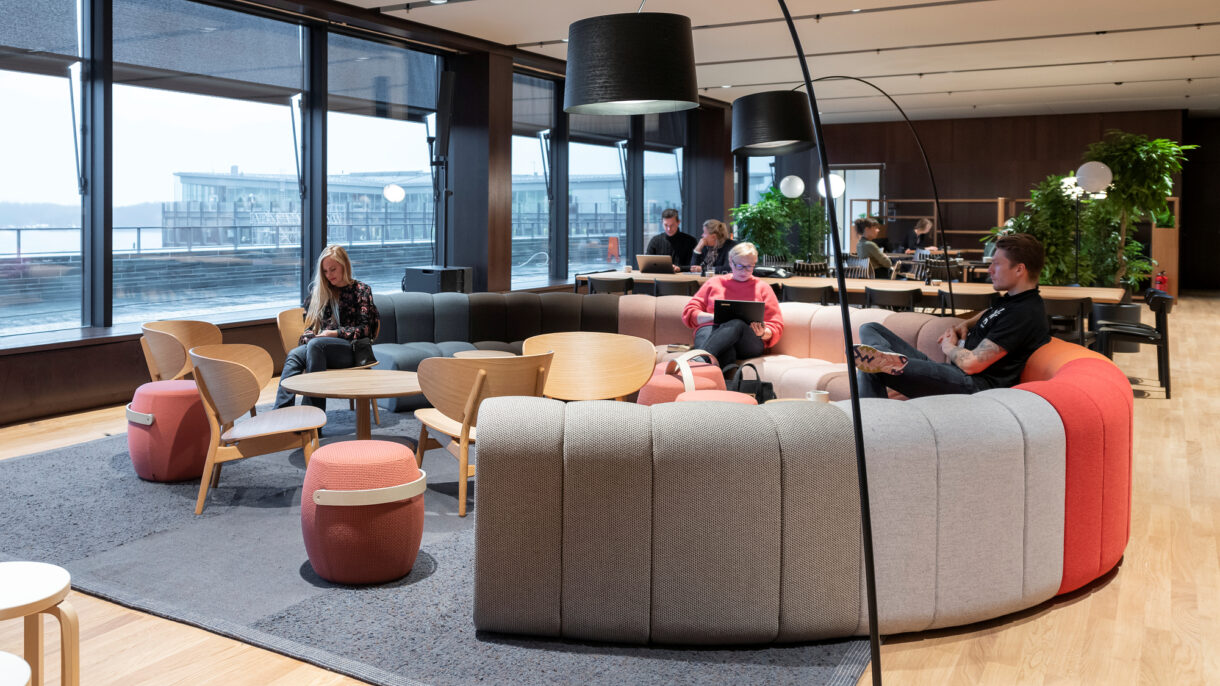
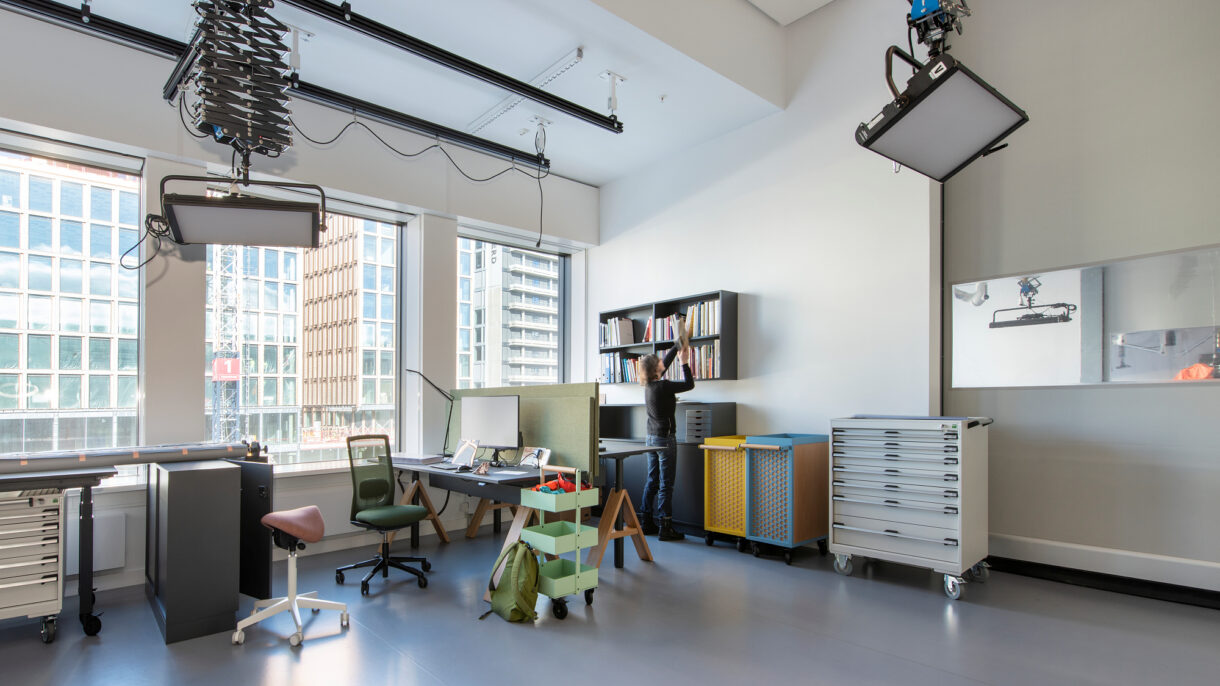
The National Museum, Oslo
2022.11.29 14:11
In the new National Museum you can experience art, architecture and design all under one roof and in completely new ways. The museum has been built with ambitious climate criteria and is a pilot project in the FutureBuilt programme.
Developer
Statsbygg
Municipality
Oslo
Architect
Klaus Schuwerk/Kleihues + Schuwerk
Environmental Consultant
Hjellnes Consult
Costs and support
Project support Enova: 17.6 MNOK.
Status
Completed 2021. Opened June 2022
Project description
The basic idea for the new National Museum is to use the available resources carefully. The museum is built using robust materials that can withstand the test of time with dignity and is clad with natural stone. The project has high environmental ambitions and is planned according to environmental goals in four key categories: greenhouse gas emissions, energy, material choice and technical building solutions.
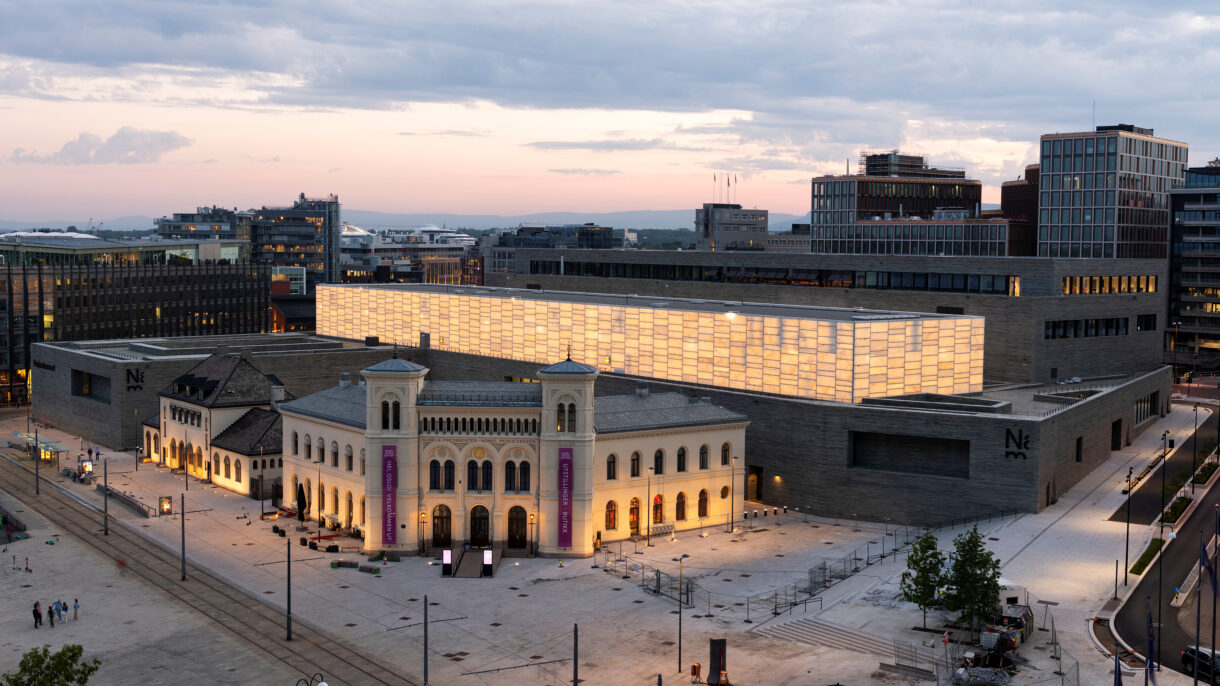
The new museum is centrally located in Oslo, adjacent to Aker Brygge on the waterfront, and is part of the city´s silhouette towards the fjord. The site was previously one of Oslo’s main train stations, and the existing station buildings, which are conservation objects, have been retained.
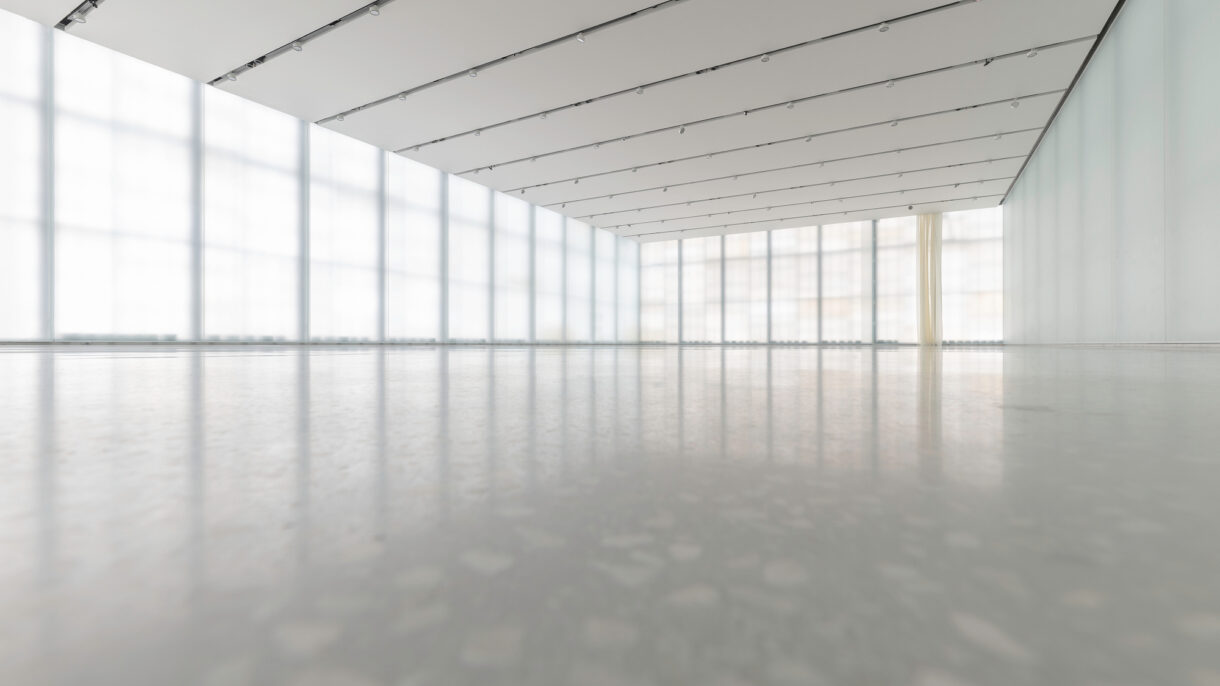
The museum is designed as a long, horizontal building that creates a new courtyard towards the former train stations buildings. This new space will house sculptures, art installations and outdoor seating for the restaurants. The building steps up to a horizontal big exibition hall, the highest volume. With its transparent walls this illuminated hall will be a visible part of the urban landscape in the evening. There is a large roof terrace accessed through the museum, with a wonderful view of the Oslo fjord and the Akershus fortress.
The new building has nearly the same cornice height as the station buildings and meets its historic surroundings with respect – elegant and with a hushed monumentality.
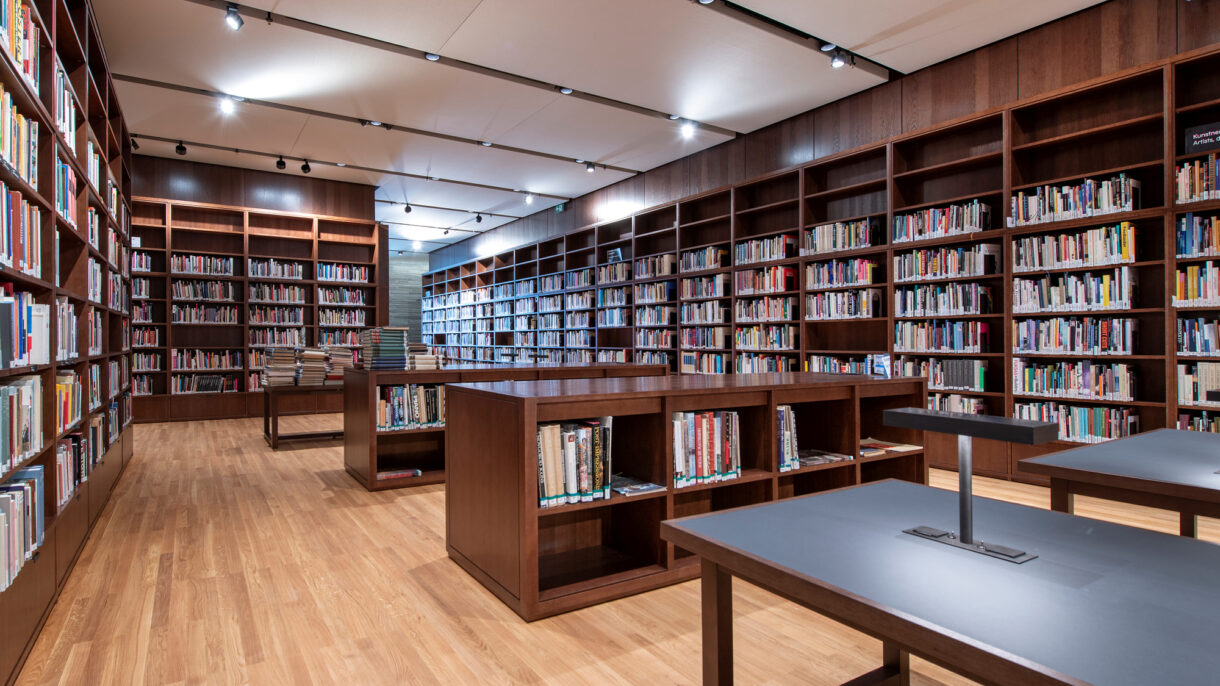
The National Museum is about 54,000 square metres, and has a functional area of about 36,000 square metres. In addition to the permanent exhibitions, the building accommodates flexible exhibition spaces, a library, a multimedia and multi-functional room as well as a restaurant. The museum also has storage areas, workshops and offices for the employees.
Low carbon strategies
The new National Museum project is designed according to FutureBuilt´s criteria of at least a 50 percent reduction of greenhouse gas emissions compared to today´s building standard. The emission calculation covers the areas of transport in use, energy consumption and material use. The greenhouse gas emissions for the museum "as built" shows a decrease of 47,3 percent.
The new museum is centrally located, with very good connections to public transport and in walking distance from many central functions. The museum has no car parking facilities.
The museum building is designed as a compact building, which is a good starting point for energy optimisation. A number of parameters were prioritised in the project development, including improved building air tightness, reduced cold bridges and demand controlled ventilation, a U-value of 0.8 for all windows and a U-value of 0.8 for the glass façade in the exibition hall on top. The building satisfies the energy goals with a good margin.
Passive solutions will reduce energy use. For example the heavy wall construction in the exhibition areas contribute to reduce fluctuations in interior temperature and relative humidity. This will, however, have limited influence on energy consumption, as the internal climate requirements are very strict. A heat pump with seawater as the heat source is installed and will also be used for cooling when possible. The peak heating requirements of the building is covered by district heating.
Alternative material use is prioritised to reduce greenhouse gas emissions. The material´s internal climate properties, chemical content and recycling potential have also been considered. Low carbon cement have been used for all concrete elements, unless special technical requirements dictate otherwise. Other examples are the use of recycled steel and linoleum instead of vinyl flooring. The project has worked systematically to choose products with a minimum of hazardous substances or environmental toxins.
Rainwater is mostly led directly to the sea without taxing the public storm water system. There are also new trees on the property and climbing plants on the Vestbane façades. The highest roof of the building is built as a green roof, with a sedum surface.
Read more here:
Environmental Measures
Bymiljø og arkitektur
Museet har en sentral plassering i byen, ligger i tilknytning til den tidligere vestbanestasjonen og bidrar til å danne byens silhuett mot fjorden. Den overordnede ideen for prosjektet er å gi det nye Nasjonalmuseet en verdig plass i byen uten å konkurrere med Oslo rådhus, Akershus festning og de verneverdige stasjonsbygningene. Bygget skal være elegant med en lavmælt monumentalitet.
Sammen med de to eksisterende bygningene på Vestbanetomten skaper museet et nytt byrom som introduksjon til museet. Den nye plassen rommer skulpturer, kunstinstallasjoner og utearealene til restauranten. Nybygget har tilnærmet samme gesimshøyde som stasjonsbygningene og møter sine historiske omgivelser med respekt. Skifer fra Oppdal skal dekke museets fasade, gesims, innvendig forblending og heller på tak.
Museet har en stor takterrasse med adkomst gjennom museet. Terrassen gir utsikt over sjøen og mot Akershus festning.
Klimagassutslipp
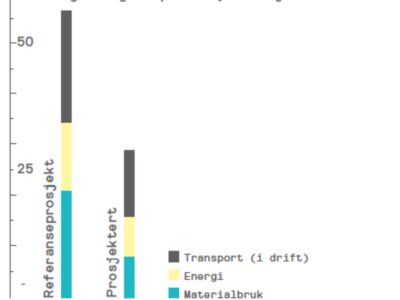
Prosjekt Nytt Nasjonalmuseum ble prosjektert etter FutureBuilt-kriteriet om minst 50 prosent reduksjon av klimagassutslipp sammenlignet med dagens standard.
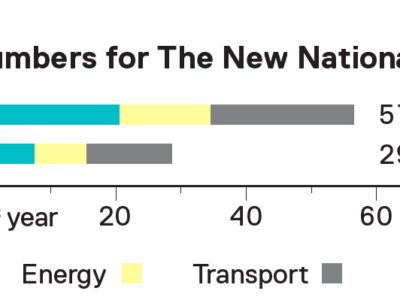
Det er utarbeidet et klimagassregnskap som dekker områdene transport i drift, stasjonær energi og materialbruk. Revidert forprosjektregnskap viser en samlet reduksjon i klimagassutslipp på 49 prosent. Klimagassutslipp fra transport er redusert med 42 prosent sammenlignet med referansebygget. Dette skyldes i hovedsak prosjektets svært sentrale plassering, men også tiltak knyttet til redusert parkeringsdekning. De strenge energikravene og valgt energiforsyning resulterer i en reduksjon på 42 prosent i klimagassutslipp fra energibruk. Utslipp knyttet til materialbruk er i forprosjektet beregnet til hele 61 prosent. Endelig regnskap for ferdig bygg er ikke klart ennå, men prognosen antyder cirka 46 prosent reduksjon. Bedre energieffektivitet enn målsetning teller positivt, mens større materialmengder enn først planlagt teller negativt.
Areal og transport
Det nye museet er sentralt lokalisert, med svært gode forbindelser til kollektive transportmidler og i gangavstand fra mange sentrale funksjoner. Ved beregning av klimagassutslipp for transport slår den sentrale plasseringen positivt ut. I tillegg er parkeringstilgangen redusert. Dette gir en forventet reduksjon på 65 prosent klimagassutslipp fra transport sammenlignet med referanseprosjekt.
Energi
Museumsbygningen er utformet som en kompakt bygning, noe som i seg selv er et godt utgangspunkt for energioptimalisering.
Følgende parameter ble vektlagt i utarbeidelsen av prosjektforslaget; forbedret tetthet, lavt luftlekkasjetall, redusert kuldebroverdi, behovsstyrt ventilasjon, U-verdi 0,8 for alle vinduer, U-verdi 0,9 for glassfasade i utstillingshallen på toppen.
Med utgangspunkt i tiltakene overoppfyller bygget energimålet med god margin. Foreløpig viser energiberegningene at målene for både levert energi og reellt energiforbruk nås med cirka 15 kWh/m² år. På grunn av sin størrelse og geometri er ytterveggsarealene relativt små, og U-verdiene i klimaskallet har derfor liten innvirkning på energiresultatet.
Prosjektet har sett på å benytte passive løsninger for å redusere energiforbruket. Tunge veggkonstruksjoner i utstillingsarealene ville kunne ha bidratt til å redusere svingninger i innetemperaturen og relativ fuktighet. Dette ville imidlertid hatt lite innvirkning på energiforbruket da inneklimakravene er veldig strenge.
For oppvarming og kjøling av bygget er det installert en varmepumpeløsning med sjøvann som kilde for energiveksling. Topplast til varmeanlegget dekkes med fjernvarme. Frikjøling vil benyttes når dette er mulig.
Konstruksjoner og materialbruk
Det er stilt strenge krav til materialer i bygget med tanke på grenseverdier for klimagassutslipp, andel gjenvunnet råstoff, inneklimaegenskaper, fravær av helse- og miljøfarlige stoffer, samt dokumentasjon av miljøegenskaper gjennom tredjepartsverifiserte miljødeklarasjoner (EPDer).
Lavkarbonbetong klasse A er første valg for alle betongkonstruksjoner, med mindre spesielle tekniske krav tilsier noe annet. Andre klimatiltak er for eksempel bruk av resirkulert stål fremfor nytt stål og linoleum fremfor vinyl som gulvbelegg.
Deler av takflaten vil være grønt tak med sedumplanter som fordrøyer regnvann og reduserer belastningen på dreneringssystemet. I tillegg plantes det en stor eik på museumsplassen foran hovedinngangen og klatreeføy på deler av fasaden.
Key Figures
AREA COVERAGE
50 337 m² (Net heated area) for 750 000 users.
| Area BTA | 54350 m2 |
| Area BRA | 51759 m2 |
| Heated area BRA | 51896 m2 |
| Number of residents / users | 750000 |
| Glass Share | 11,2 % |
| Compact clergy Factor | 0,1005 m3 volume/m2 |
GREENHOUSE GAS ACCOUNTING
| Reference | Project | Done | Operates | |
| Energy | 14,3 | 6,6 | 6,5 | — |
| Material Use | 21,2 | 10,2 | 11,1 | — |
| Transportation | 22,1 | 12,8 | 12,8 | — |
ENERGY
Net energy consumption: 85 kWh/m² year. Delivered energy: 59 kWh/m² year (Calculated according to NS3700/3701).
| Energy label: | A |
| Heating Rank: | Light green |
| Net energy: | 87,5 kWh/m2/year (NS3031) |
| Supplied energy is calculated: | 61,2kWh/m2/year (NS3031) |
| Energy Sources: | Heat pump water-water (primary load), district/ local heating system (peak load) |
ENERGY BUDGET
| Space heating: | 12 kWh/m2/year |
| Plumbing: | 20,5 kWh/m2/year |
| Hot water: | 10,2 kWh/m2/year |
| Fan operation: | 12,9 kWh/m2/year |
| Pump operation: | 3,6 kWh/m2/year |
| Lighting: | 14,8 kWh/m2/year |
| Technical equipment: | 2,9 kWh/m2/year |
| Ventilation Cooling: | 9,2 kWh/m2/year |
BUILDING TECHNICAL
| U-value roof: | 0,13 average value |
| U-value floor: | 0,06 average value |
| U-value exterior wall: | 0,22 average value |
| U-value window/doors: | 0,9 average value |
| Tightness Testing (measured) | 0,1 (At 50 Pa pressure) |
| SFP factor ventilation: | 2 kW/(m3/s) |
| Varmegjenvinneer ventilation: | 78 % |
TRANSPORTATION
| Distance to center: | 50 m |
| Nearest welding mac. koll.knutepkt: | 50 m |
| Parking: | 0,08 (Pr. 1000 m2) |
| Bicycle Parking: | 1,8 (Per 1000 m2) |
COSTS AND SUPPORT
Project support Enova: 17.6 MNOK.
Project Information
PROJECT DETAILS
| Address: | Brynjulf Bulls plass 1, Oslo |
| Municipality: | Oslo |
| Project period: | 2010 - 2021 (opened 2022) |
| Status: | Completed (opened June 2022) |
| Project type: | New building |
| Function / Building type: | Cultural building / facility |
| Environmental standard: | Passive house standard |
| Exemplar Program: | FutureBuilt |
| Competition Form: | Open plan and design competition |
| Contract practice: | Construction management contract |
PROJECT TEAM
| Client: | The Royal Norwegian Ministry of Culture |
| User: | National Museum |
| Principal: | Statsbygg |
| Architect: | Klaus Schuwerk/Kleihues + Schuwerk |
| Subcontractor: | Dyrvik Arkitekter AS |
| Landscape Architect: | Østengen og Bergo Landskapsarkitekter AS |
| Interior Architect: | Kleihues+Schuwerk |
| Project Management: | Statsbygg |
| Universal Design: | Rambøll AS |
| Environmental Consultant: | Hjellnes Consult AS |
| Counselors: | Rambøll AS, Multiconsult AS, Dyrvik arkitekter AS, BIM Consult AS, Asplan Viak AS, Gaia Lista |
Map
Map